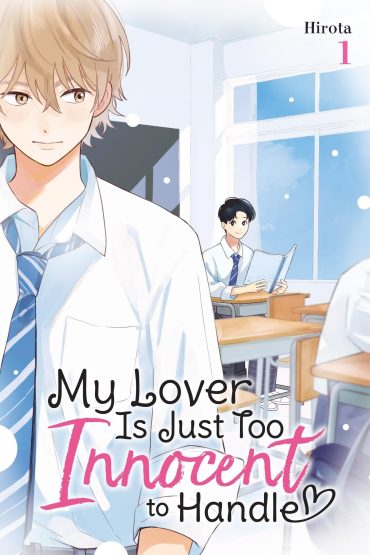
My Lover Is Just Too Innocent to Handle Volume 1 Review
 Sarah •
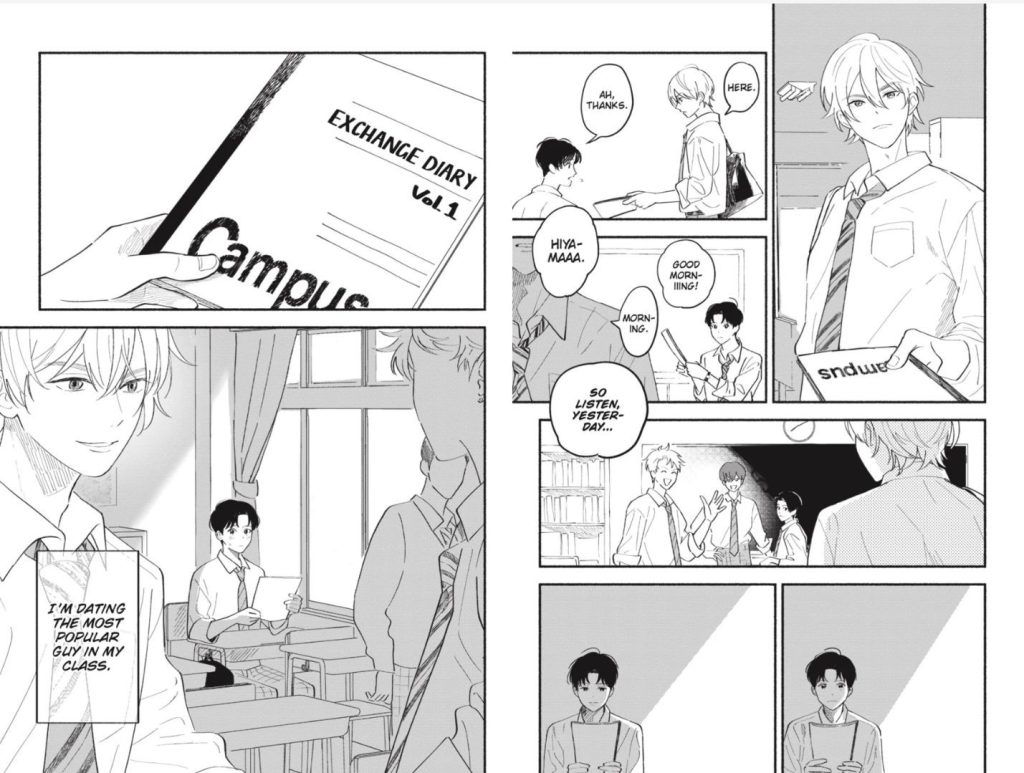
Hiyama is good-looking, sociable, the most popular guy in the class. So why is he fascinated by Hasegawa, who’s quiet and a member of the gardening club; fascinated to the extent that he wants to ask him out? Hasegawa is surprised when Hiyama approaches him so Hiyama suggests that they communicate using exchange diaries.
In spite of Hasegawa’s shy, modest exterior, once he gets over his initial shock at being asked out, he turns out to be a good companion and foil for the outward-going Hiyama. They go on a date together on summer break and after a few initial stumbles, both have an enjoyable time. But when they’re back at school, a first-year member of the gardening club, Keita (who looks up to Hasegawa) spots the two of them together and makes the wrong assumption. Hiyama is surprised when the freshman confronts him and demands, “Could you please leave Hasegawa-senpai alone?”
‘A good old-fashioned exchange diary’ is the way the publisher’s blurb describes it but the concept is not that well-known in the West. According to Wikipedia: ‘An exchange diary (kōkan nikki) is a notebook shared between friends, who take it in turns to write in their thoughts or other comments. Exchange diaries were especially popular in Japan in the 1990s in elementary and junior high schools, particularly among girls’ and it goes on to cite several series that feature them, including Marmalade Boy, Saikano and Wandering Son.
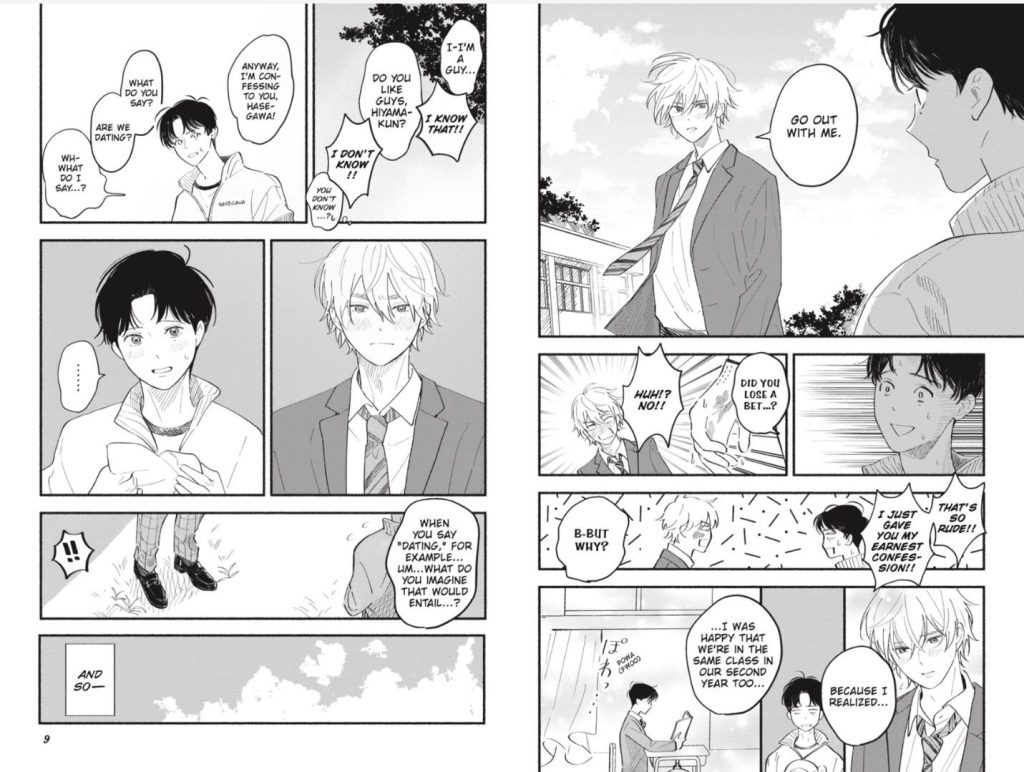
The set-up where the handsome, outward-going boy falls for the quiet, ordinary ‘unassuming’ classmate is one that we’ve often seen before in various permutations. These two attend an all-boys high school so those typical scenes where the handsome protagonist ignores the adoring glances of the girls only happen when the school festival takes place and friends from middle school come to visit. But even when Hiyama and Hasegawa go out on a first date, Hasegawa is aware of the attention his boyfriend attracts from women in the street. My Lover Is Just Too innocent to Handle is one of those ‘the quiet one becomes the envy of all because the glamorous one has eyes only for him’ wish-fulfilment stories. Am I being a little unfair – even cynical – in pointing this out? Hasegawa doesn’t seem troubled or conflicted by the thought of dating a boy and refreshingly, perhaps, no one is calling the two out for being gay or subjecting them to any kind of bullying. It’s all rather sweet and idealistic; not every Boys’ Love has to be angsty, after all.
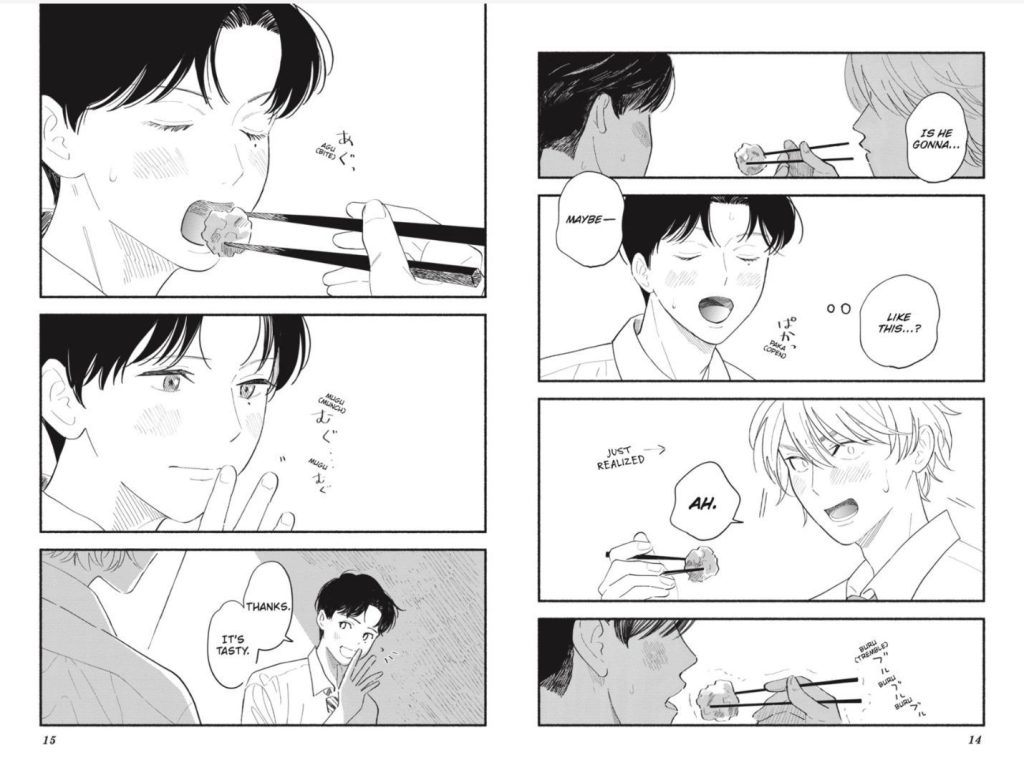
The mangaka Hirota’s art is as straightforward as the story she’s telling and pleasant to look at. From the afterword, it seems to be her first manga to be issued in volume form and this might explain the reliance on familiar BL situations such as when one partner falls ill and the other comes to look after them etc. etc.
Translation for Yen Press is by Katelyn Smith and works well, paired with Katie Blakeslee’s lettering; there’s a colour image at the front but no extras other than the mangaka’s one-page afterword.
There’s a second (and final) volume of this still to come in September. Yen Press also publish Sasaki and Miyano and I Cannot Reach You which portray high school gay relationships but with a much higher volume count that’s allowed the mangaka in each case to go into far greater depth of characterization. This story feels sweet but a little superficial so far; hopefully the second volume will bring greater depth to a BL story of high-school boys that needs something a little extra to make it stand out in a crowded field.
Read a free preview on the Yen Press website here.
Our review copy was supplied by the publisher Yen Press.