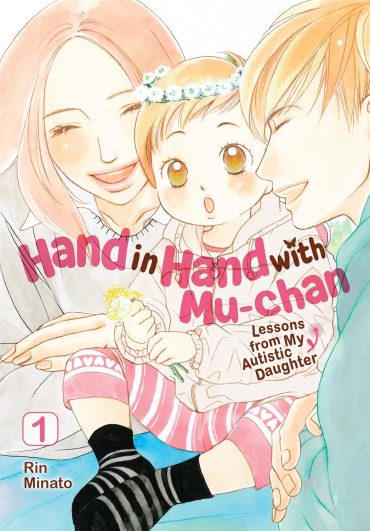
Hand-in-Hand with Mu-chan: Lessons from My Autistic Daughter Volume 1 Review
 Ian Wolf •
Warning: This manga features someone contemplating suicide.
It’s not often you come across a manga that feels like it relates to you specifically. Most manga series are fantastical. Even the ones set in places that we’ve all been to like school are very often based on some bizarre scenario. Thus, this review makes for a pleasant change, given that it is something very much based on reality, but it is about the condition that I have myself.
The story follows Aya Itou, who gives birth to her daughter Mutsumi, or Mu-chan for short. When Mu-chan reaches the age of eighteen months, she goes for a medical check-up, but Aya is worried about Mu-chan because she appears to be developing slowly. She has yet to speak among other things. A doctor tells Aya that Mu-chan might be developing differently, but it is when Aya is giving her daughter a nappy change that she overhears some other mothers talking about a parent who had a child who was autistic.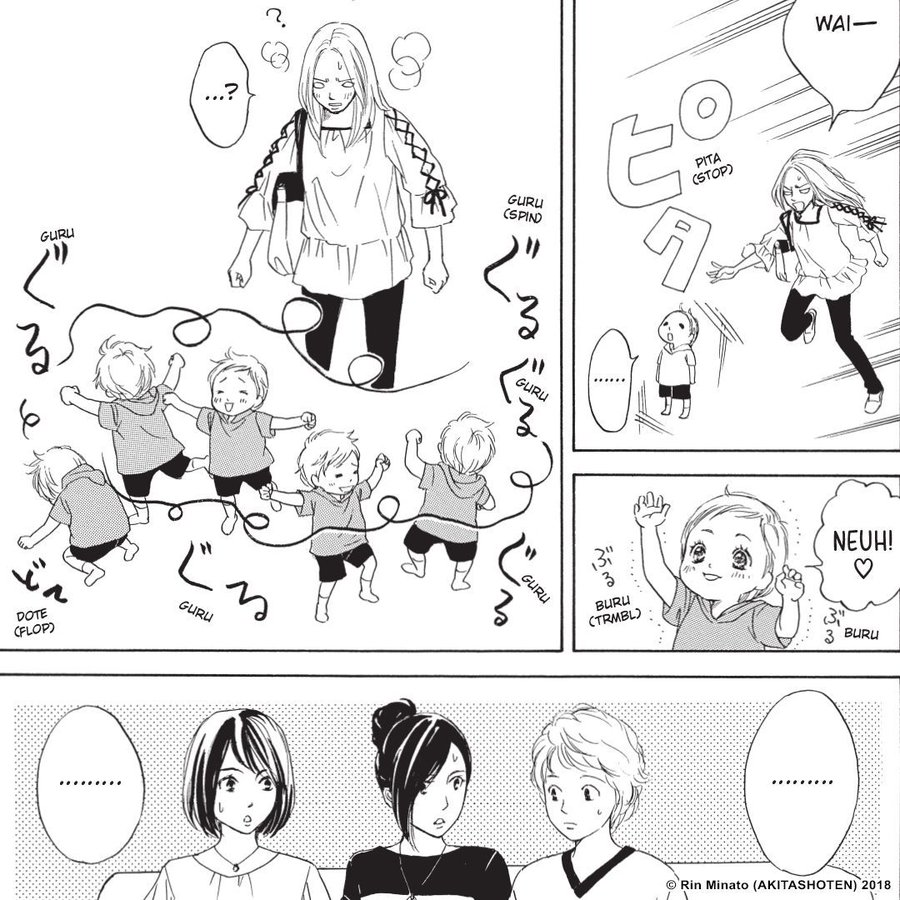
Aya starts looking into things herself and concludes that Mu-chan is indeed autistic. At first, she is driven to despair. At one point Aya contemplates suicide while her husband considers divorce, but they come to overcome their fears. However, she cannot properly register Mu-chan as autistic until she is three-years-old. In the meantime, Aya gets Mu-chan into a specialist playgroup at a school for disabled children, and tries to deal with other people, including her own mother who is concerned about that way Mu-chan is being brought up.
Hand-in-Hand with Mu-chan is not the first manga to deal with the subject of autism. The 2000s manga With the Light: Raising an Autistic Child by Keiko Tobe, which was also released in English by Yen Press, covers the subject in depth, although it had a boy rather than a girl as focus. Sadly, With the Light is long out-of-print in English except for digital releases, and the series ended up unfinished due to Tobe’s death in 2010. Hand-in-Hand’s author Rin Minato writes this manga from their own personal experiences, having an autistic child of her own which resulted in Minato quitting as a mangaka for about 10 years, before returning to create a series based on what happened to them.
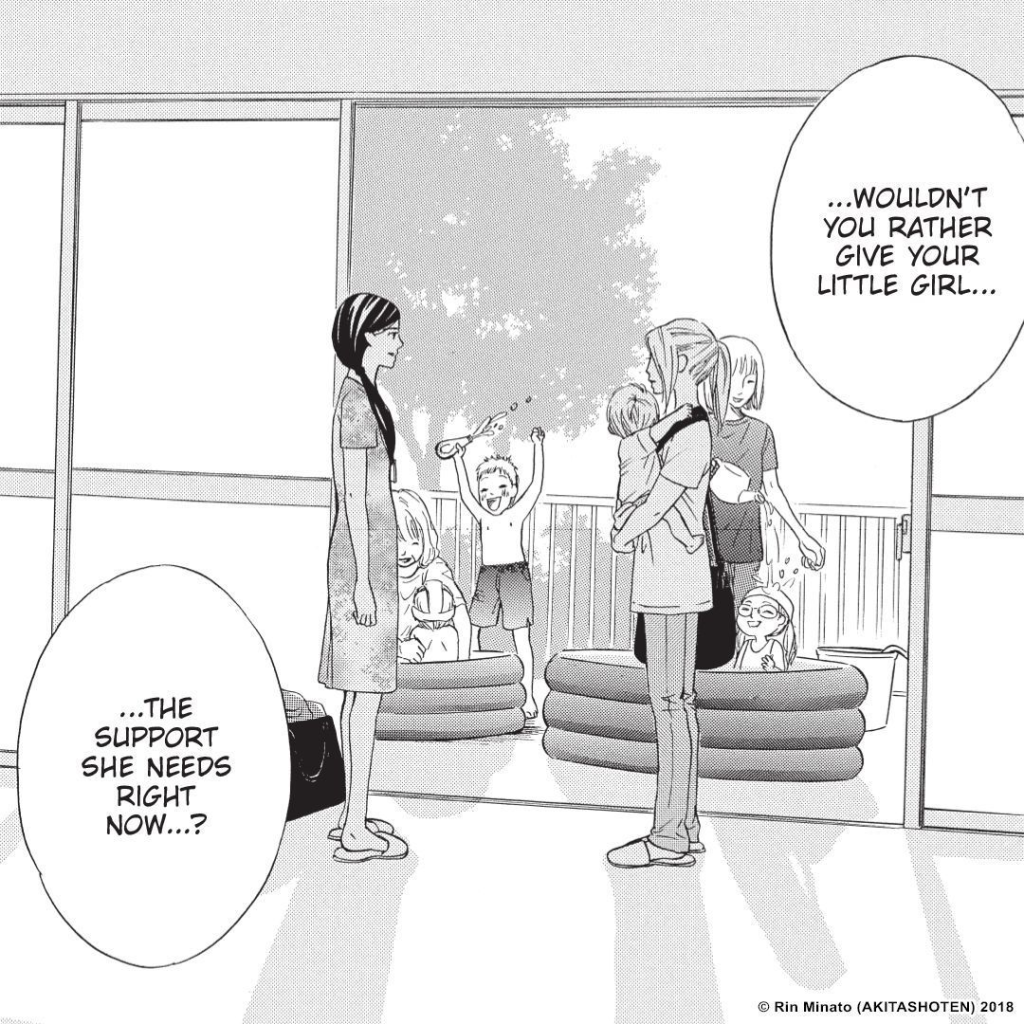
As someone with an autistic spectrum disorder, there are many things I can connect with when it comes to Mu-chan: like her I was a late developer in speech, I’ve had issues when it comes to being a fussy eater, and I have a habit of walking on tip-toes (when I was a child, a doctor tried to stop this by giving me metal-soled shoes to wear; the result was me breaking the soles). Thus, I’m more than happy when it comes Minato’s depiction of Mu-chan. There is also plenty of supporting information alongside translation notes that provide extra details regarding autism. Ajani Oloye’s translation of the series is commendable. Elsewhere, the lettering from Abigail Blackman is good, as is her editing which she does alongside Ren Leon, while the cover by Andy Swist, which features Mu-chan in a flower crown, is charming. Volume 2 is due out in December.
I certainly want to continue seeing what happens to this family in the following volumes, and how they can overcome what life throws at them. For those who are lacking in knowledge regarding autism or other aspects of neurodiversity, this is a series I would recommend learning from.
A free preview can be read on the Yen Press website.
Our review copy was supplied by the publisher Yen Press