Interview: How Ridley Scott Inspired LUPIN THE IIIRD

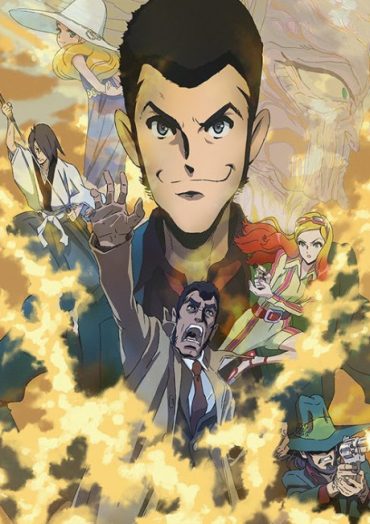
This week, Takeshi Koike’s grittier vision of the LUPIN THE IIIRD franchise (as it’s stylised here) comes to an end. Spinning out of Sayo Yamamoto’s captivating character study The Woman Called Fujiko Mine series that decontextualized anime’s most prolific femme fatale, Koike’s film series each placed the spotlight on a specific character of this historic franchise, starting with Daisuke Jigen’s Gravestone in 2014. LUPIN THE IIIRD: The Movie – The Immortal Bloodline, in UK and Irish cinemas from Saturday 21st February, closes out Koike’s stylistic vision of these classic characters with an explosive, almost pulp Sci-Fi adventure that brings back one of the franchise’s most iconic villains. Takeshi Koike attend the film’s UK premiere at the Scotland Loves Anime festival back in October 2025, and we had the opportunity to talk with him about his film, the enduring popularity of these characters after over 50 years, and more.
This interview was conducted through an interpreter.
AUKN: In the West, you are predominantly known for Lupin the IIIrd and Redline, but your career in anime started long before that. Could you describe how you started your career, and moved into directing?
Koike-san: How I came to work in animation is because I watched a lot as a child and found it inspiring. I did watch animation for children; action and adventure like Mazinger Z and [Future Boy] Conan. When I started watching films, I found them more grown-up in terms of the storylines and the atmosphere, and they were even more inspiring and I decided I wanted to work in animation, and applied to work in a studio.
Your work such as Redline and your Lupin the IIIrd films have such distinctive visual styles. I was wondering if you have any particular influences as an artist, and director?
As an animator, I would say I was influenced by Yoshinori Kanada, a popular and well-known animator in Japan who I looked up to. The first company I worked for was Madhouse. I applied to work there because I wanted to work under Yoshiaki Kawajiri, who animates and directs.
Before directing this series of films, you were Character Designer for The Woman Called Fujiko Mine and animation director for a couple of episodes. How did that project come about, and you later directing the films?
I got involved in The Woman Called Fujiko Mine because the director was Sayo Yamamoto, who had been my kohai [junior] at Madhouse and they approached me. And asked me to be the character designer. I liked Monkey Punch’s series as well, so I didn’t have to think twice, and that’s how I got involved. Then, it was a producer on Fujiko Mine who said they liked my designs but they wanted to see me direct Lupin, and that’s how I ended up directing the series of films.

Each film before The Immortal Bloodline focused on a different core character. Was there a particular one who you found more interesting to explore, or even more challenging?
I think my favourite is Fujiko but the hardest one was Zenigata, because he’s a bit different to how you’re used to seeing him on TV – he’s a bit more serious and dryer, and that was hard to get right.
As a fan, I actually liked how Zenigata is a bit more serious and dry in these films. I think it works really well, the style and tone.
Thank you!
Over 50 years since the debut of Monkey Punch’s original manga and the first anime, Lupin the 3rd continues to be popular and inspire new projects. What do you personally attribute to the franchise’s continued appeal, and success?
I think Monkey Punch created some really recognisable characters. The five of them – Lupin, Zenigata, Fujiko, Jigen, and Goemon are all really distinctive characters both in terms of their characteristics and their look – instantly recognisable silhouettes, and that makes it fun for different directors to be able to play with these characters in different ways.
Throughout those years, the franchise has seen a variety of creative styles and tones, such as The Castle of Cagliostro, Mystery of Mamo, and of course your films. How did you settle on your own individual approach and style to this franchise?
Well, as a child, I really liked watching the TV series that we call Part 1, and my style is based on that. I didn’t want to lose that world, characters, and story from that series.
Speaking of earlier films, The Immortal Bloodline features the return of a character first teased in Daisuke Jigen’s Gravestone. What drew you to bring back Mamo for your films in the modern day?
Well these films weren’t a series per se, but I did think it would be interesting to have a film focused on each of these characters. So, I started with a film about Jigen, who is the more popular member of the gang among fans. In terms of the storyline, I like storylines where the focus isn’t on the stealing, but it’s on the battle between the gang and some worthy adversary. So that was the kind of story I wanted here, and I liked the idea of having someone behind the scenes pulling on the strings. From when I was a kid, I liked Mamo as this underworld figure central to the plot – the most powerful character, and I decided it would be good if I could tie him into the story.
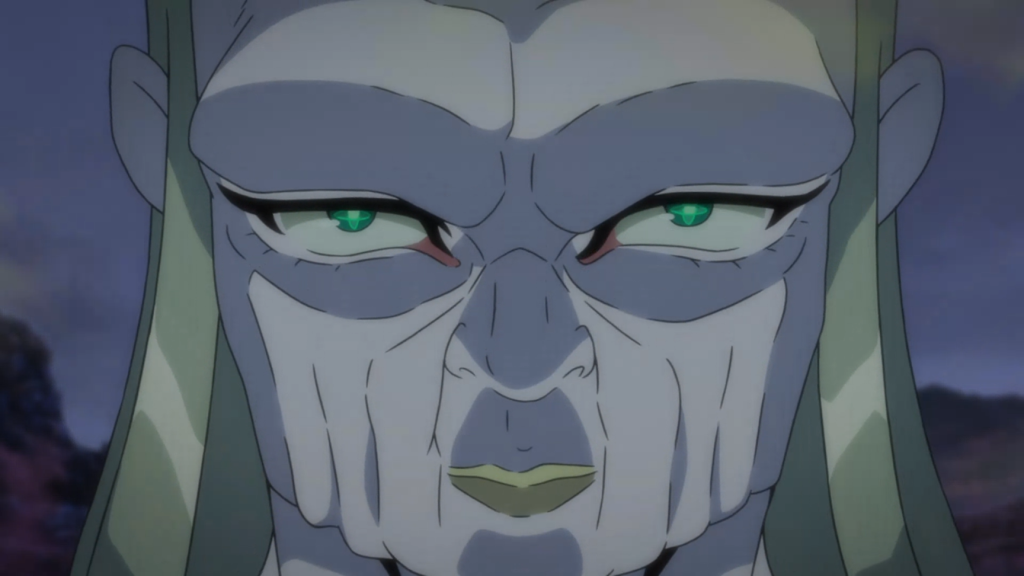
On villains, I really liked how Muom felt like an unstoppable force of nature, with a genuine sense of dread and helplessness whenever he appeared. Was there any particular inspiration behind Muom, and how he was depicted?
Muom came about early on in the planning stages thanks to the creative advisor Katsuhiro Ishii in the conversations with the writing team. He mentioned the white giant from Ridley Scott’s Prometheus, who lands on a planet and proliferates their genes to ultimately create humanity. He said it was a very mysterious and interesting character. I liked that idea and wanted to try and incorporate it into this film, in the sense that it’s a connection to humanity, but is also mysterious.
On the concept of Muom being quite Sci-Fi in nature, how do you feel that the franchise is able to fit itself into stories inspired more by Sci-Fi and other genres?
You do have a bit of freedom in the Lupin world, but I don’t think you’d want to completely overturn that to put it into another genre. In this case, because it started with the idea of the Prometheus giant it does have that element of Sci-Fi, but it still takes place on Earth, and still takes place in nature. I think if you’re careful, it’s possible to incorporate Sci-Fi elements into Lupin’s world.
In the film, Lupin reflects on how we only realise the true value of something once it’s gone, and how immortal life is worthless. That rejection of the superficial felt especially poignant coming from a thief. So, I was wondering if you could expand on your thoughts behind that?
Well, for the last film in this series, I wanted to focus on Lupin himself, and what was the appeal of this character. He is powerful – physically in action, how he can use guns… but the best thing about him is how he uses his brain to turn things around, and get out of situations. I wanted to focus on “What does he actually think?”, and what is his philosophy?
The Immortal Bloodline feels like a culmination of your previous Lupin the 3rd films, yet but in a way, it also could leave the story open. I imagine that you can’t say anything definite, but do you feel like this was a finale, or that there might be more story still to tell?
What I can say is that I intended for this to be the conclusion.
While Redline was an original work, and the rest of your directorial works have predominantly been based on existing IP, like Lupin the IIIrd, do you prefer to work on established franchises, or would you be interested in directing another original feature?
I like making originals as well. I don’t have a preference either way, really. When I was a child watching animated movies, that is what made me want to make animated movies myself and got me started in the industry. So, when I’m making something, I want it to have the same effect on young viewers – that they want to animate themselves. So, I don’t mind if it’s based on a franchise or if it’s an original. I think if it’s going to have that effect, it’s what I want to make.
Redline has a special history with Scotland Loves Anime – being shown at the first ever festival, and cemented as an audience favourite in years since (I myself first saw the film at the festival). Now you are in the UK attending Scotland Loves Anime for Lupin, so I was wondering if you have a message for the attendees who have supported your works over the years?
Well, Lupin and Redline aren’t just my films. A lot of people and staff worked very hard to make them, and they’re all looking forward to seeing how everyone at Scotland Loves Anime thinks of Lupin, and I can’t wait to go there myself.
LUPIN THE IIIRD: The Movie – The Immortal Bloodline releases in cinemas in the UK and Ireland from Saturday 21st February 2026. You can find your nearest screening at https://lupintheiiirdfilm.co.uk/
Disclosure: As well as a seasoned Anime UK News writer, Josh A. Stevens is also an employee of Fetch Publicity, who are managing the publicity for the film. All thoughts and opinions expressed in this interview are his own, and the contents of this feature adhere to Anime UK News’ journalistic independence.