

How I Attended an All-Guy’s Mixer Complete Collection Review
 Onosume •
Adapted from the manga by Nana Aokawa, How I Attended an All-Guy’s Mixer is a romantic comedy series that touches on a very particular element of Japanese culture – dansou bars.
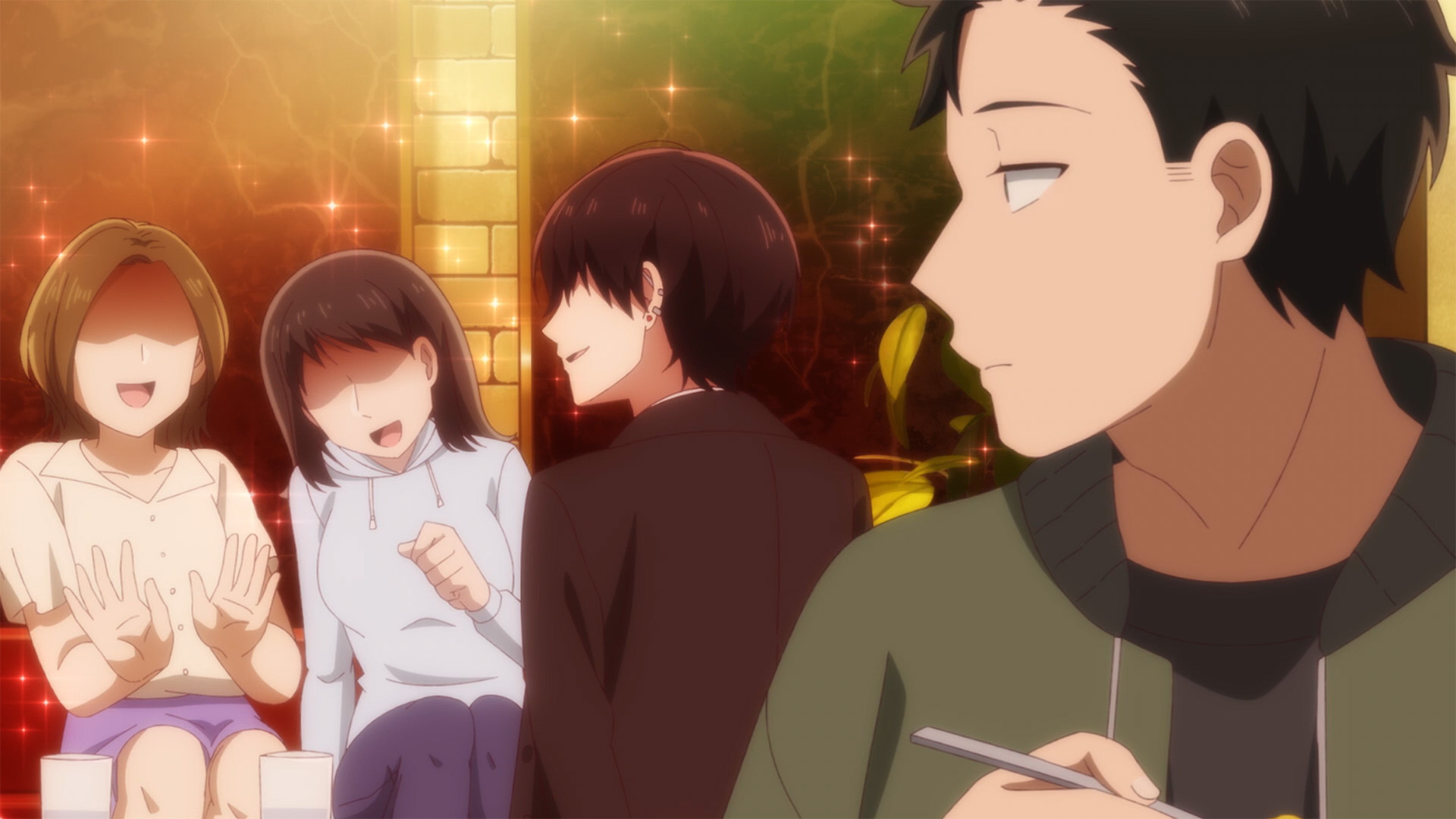
The series begins with university student Tokiwa being invited to a mixer by one of his classmates, Suo. Bringing along a couple of friends, the anxious but well-meaning Hagi and the goofy Asagi, the three turn up to the mixer but instead of being introduced to some gorgeous ladies, they are instead met by… three guys? It turns out the show’s three main women, Suo, Fuji and Kohaku, all work at the same cross-dressing dansou bar where they dress up in suits and employ pretty boy personas to entertain women. Pulled into their orbit, the guys now have to navigate formulating friendships and relationships with them as the girls continuously swap between their male and female gender roles.
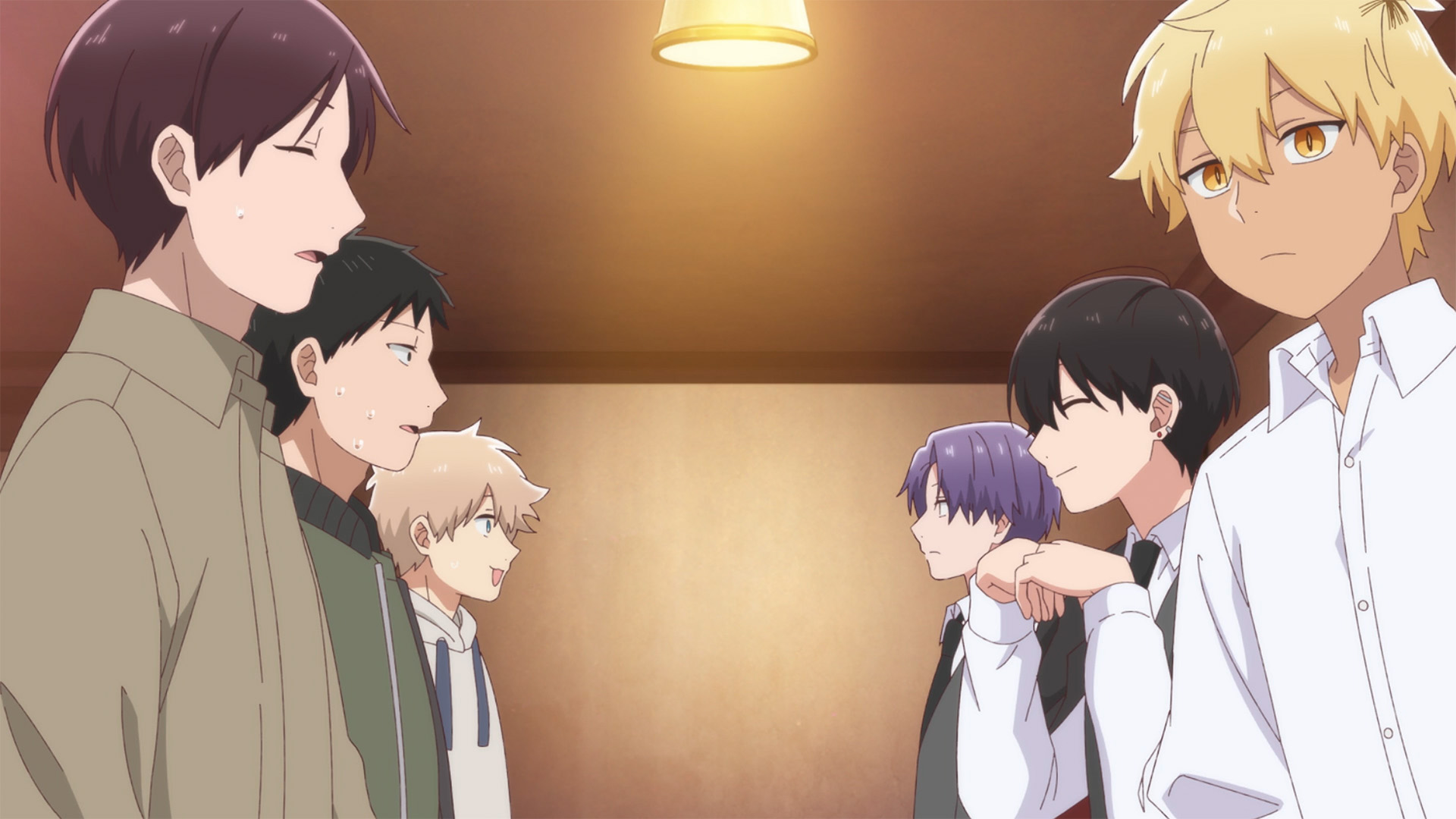
On paper, this is an interesting concept and has the potential for exploring different elements of gender politics in Japanese society. While it does touch on that at points, what we actually get is very different as the series plods down a tired romantic comedy path where it doesn’t excel at either the romance or the comedy.
A lot of the comedy here tends to revolve around the guys being attracted to the girls only when they are dressed as guys, trying to present a Boys’ Love-coded narrative of “oh but they might be gay!”. It’s an attitude that might have hit it off twenty years ago, but nowadays it comes off as a tired trope that only really tries to appeal to that stereotypical female BL/yaoi reader.
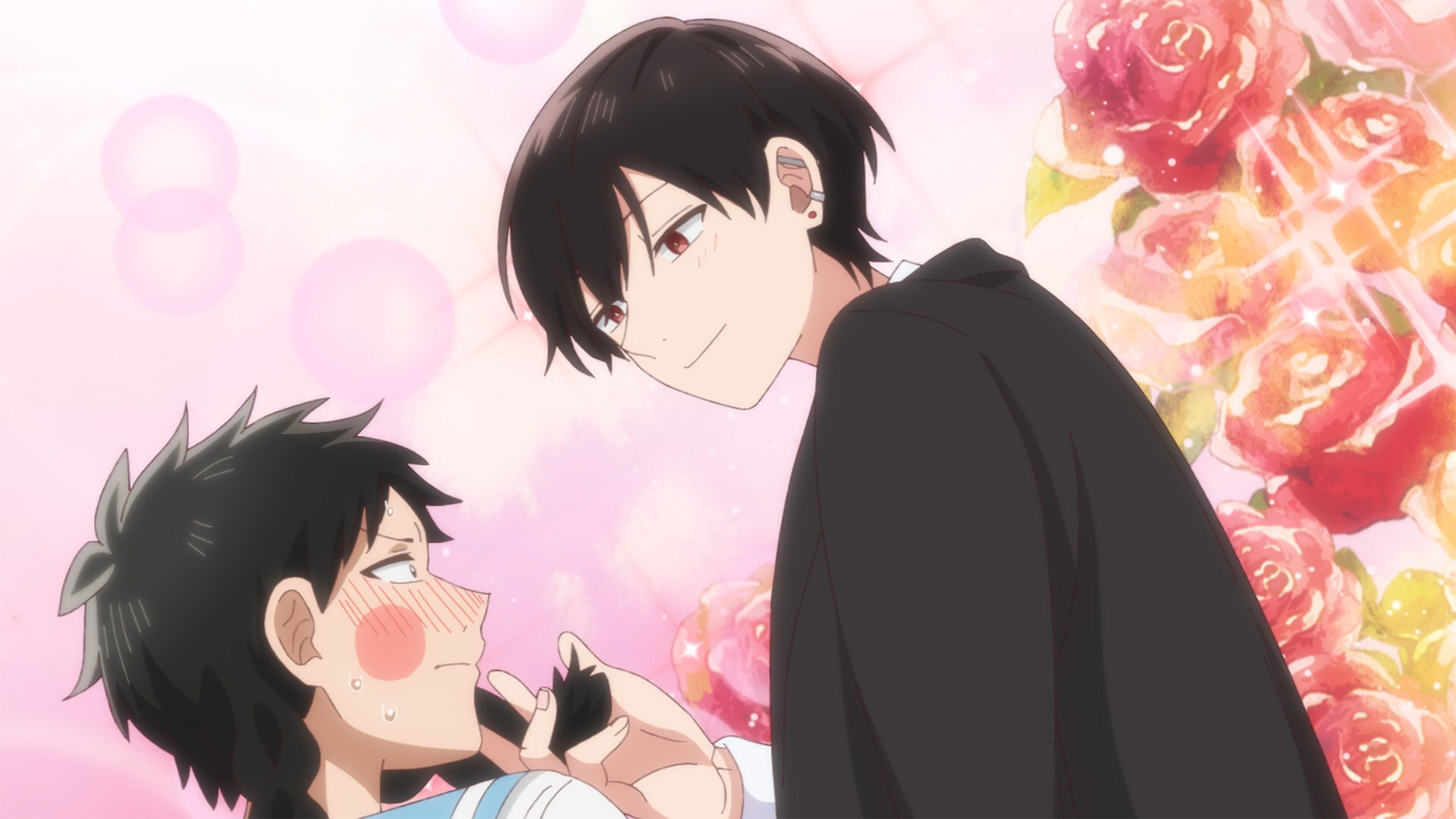
The set-up for the jokes is very situational, putting the guys into situations where they are pretty much exploited by the three girls who have massive crushes on them. Asagi, being very naïve and too trusting, quickly falls into the clutches of Fuji, who is revealed to be a doujin manga artist known for her rather explicit work. She turns to him both as a model and an assistant but has to stop him from finding out that she basically draws gay porn. Hagi, meanwhile, quickly develops a crush on Kohaku but struggles with his feelings because he only feels attracted to her when she presents as a guy, leading to a problematic set of episodes where he tries to convince himself that he’s not gay, because that would be bad, right? Tokiwa on the other hand acts more as the binding glue of the three. Suo actively pursues him and nudges him to gather the group into certain activities, but Tokiwa never really takes the initiative himself.
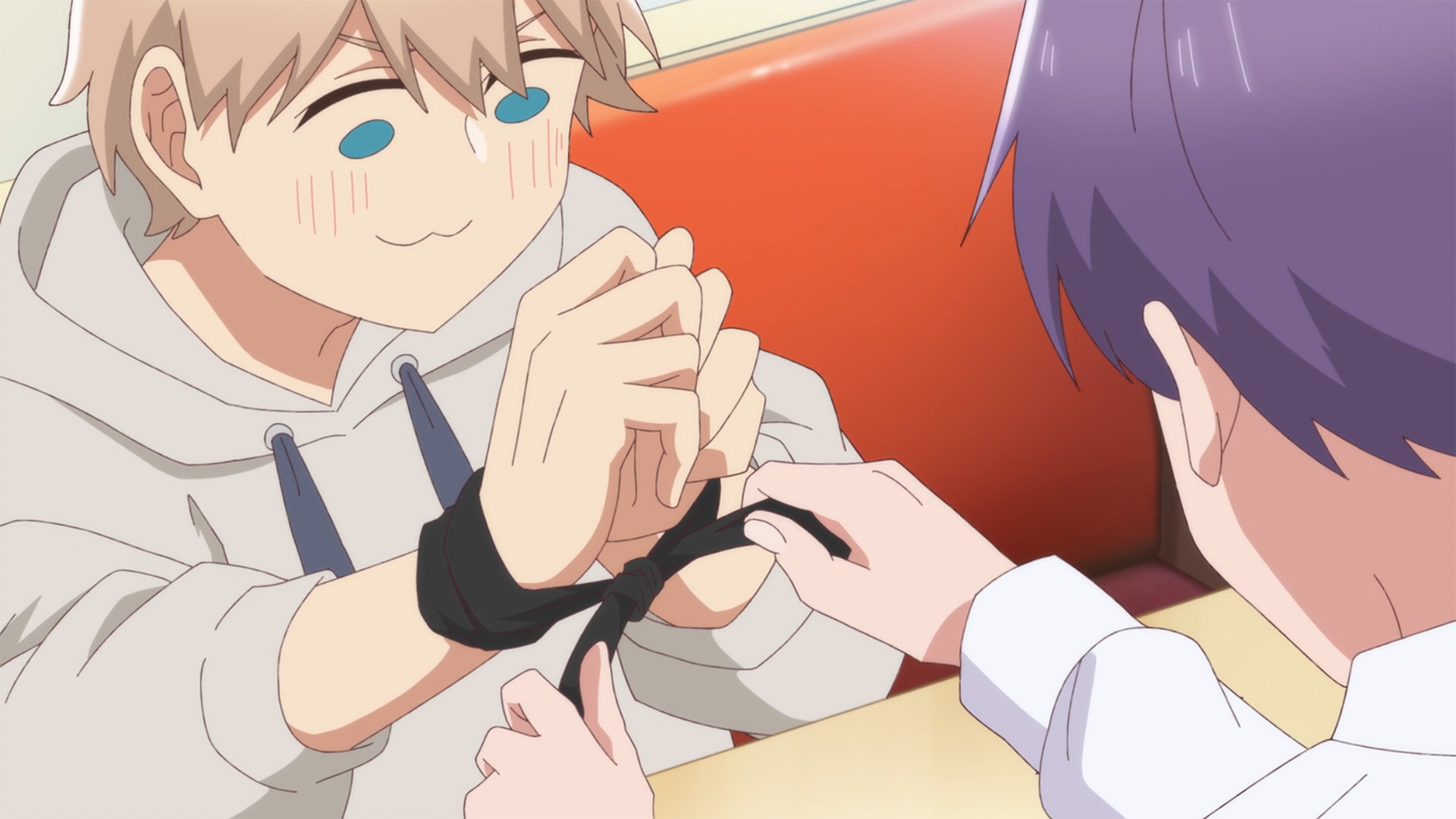
It’s interesting here that for a lot of the series it’s the female part of the cast that seem the active protagonists as they each try to nab the guy they are interested in, while the male part of the cast come off as either bland or annoying, and just not particularly funny. Tokiwa is a blank slate for the entire series and has pretty much no character development. The other two do get a bit of development, but they never really become likeable. Hagi is so insecure and whiny that you can never really root for him, while Asagi is simply played as the ditzy idiot for the show’s entire run. The girls meanwhile have actual personalities, conviction and hobbies, and we just never get to see that same level of detail with the three guys. I can tell you Kohaku loves sweet things, but I couldn’t tell you a thing about Tokiwa.

The content of each episode tends to be by-the-numbers, and generally follows the same pattern as a lot of other slice-of-life and rom-com shows. There’s the time where they go to karaoke, or go camping, or go to a festival, or go to a beach; and in each it’ll set up a particular situation between a couple of the characters which will go wrong in some way, but they patch things up and somehow get closer together because of it.
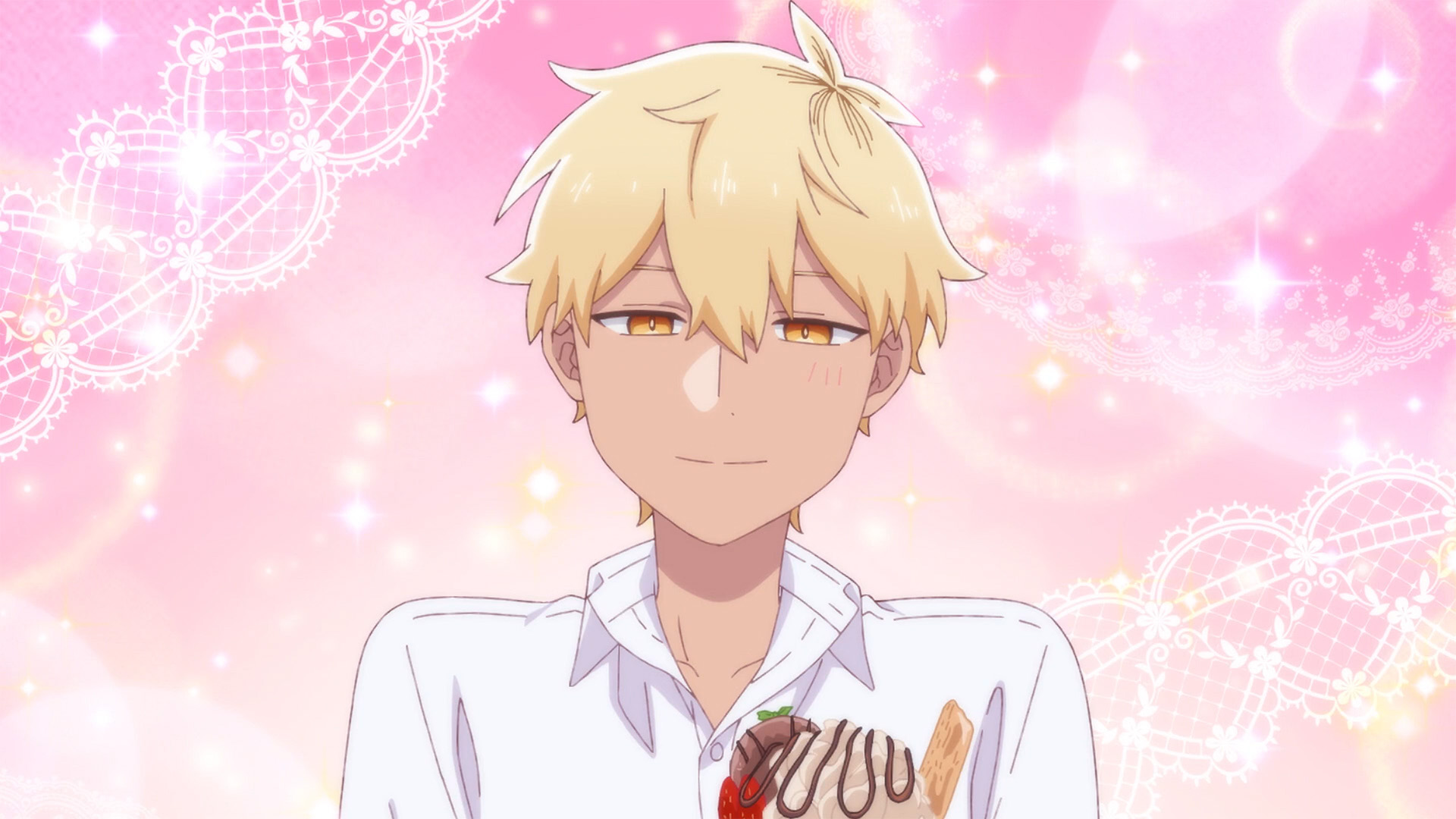
There are a few good moments, like where Asagi covers for Fuji at her Comiket stall, which is probably one of the few episodes where I genuinely laughed; or where it tries to make a good point about Japan’s rigid gender politics – yes, it’s okay for guys to like ice cream, and you absolutely shouldn’t treat people differently based on what they are wearing. Overall though, the series’ execution is very uninspired and fails to really attach you to its cast in a meaningful way.
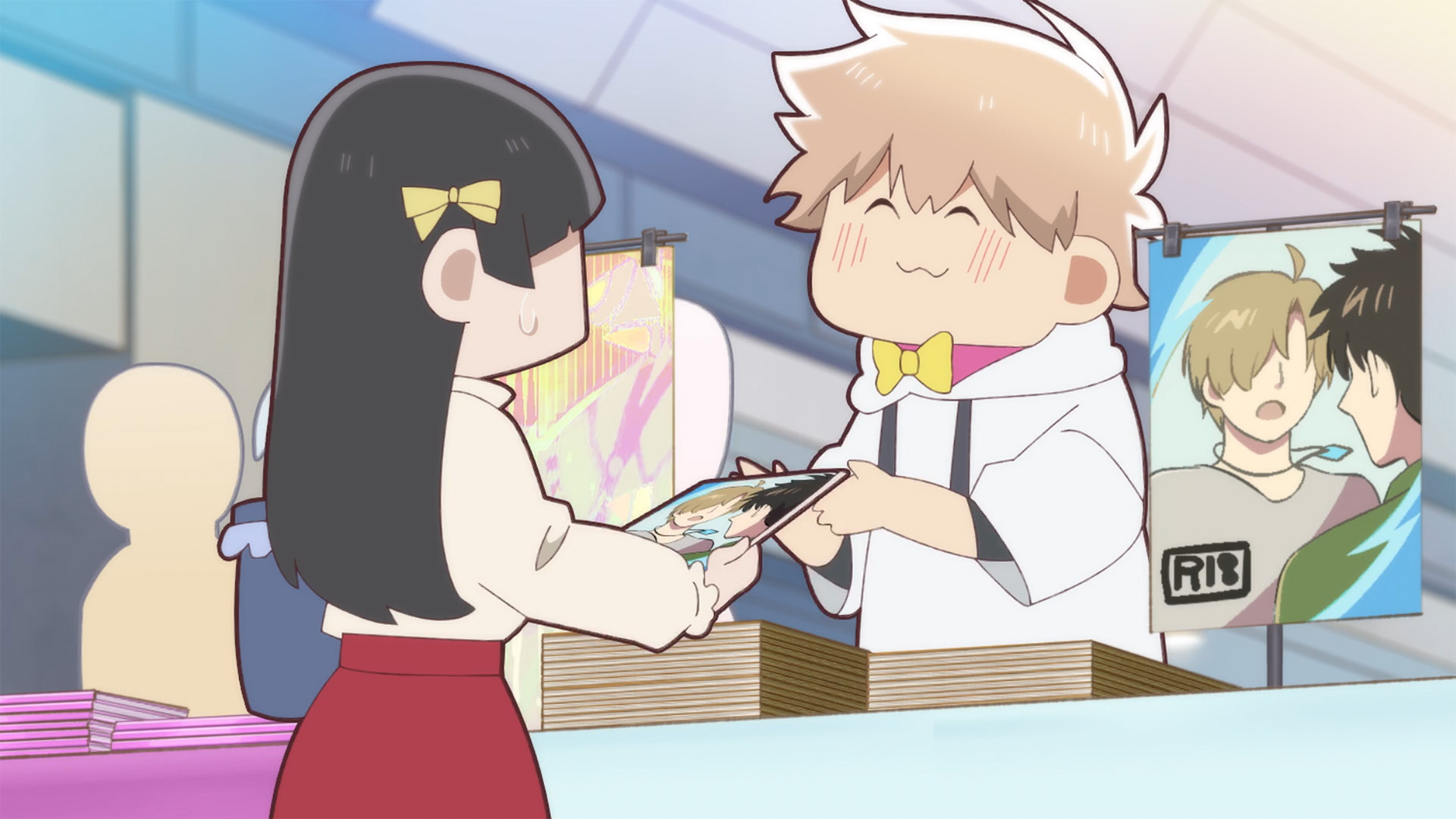
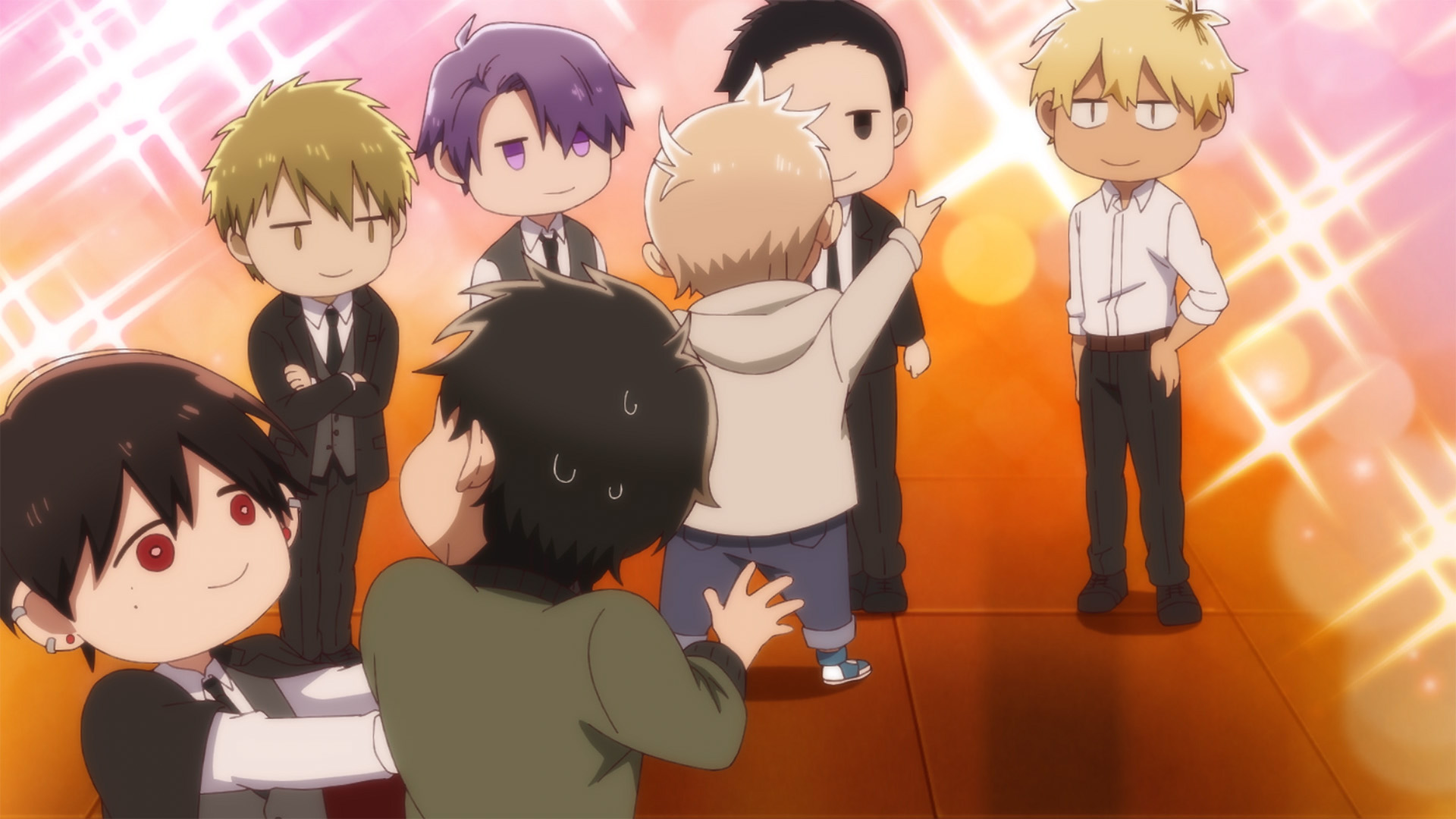
Produced by Ashi Productions, most of the show is pleasant to look at, but because of its genre it doesn’t need amazing visuals to grab your attention. The character designs for Suo, Fuji and Kohaku are good, and it’s interesting to see them swap between their “fake” male and “real” female personas, as the latter reveals a lot more about each character’s personality. The guys though are pretty bland apart from maybe Asagi whose constant smile really sticks out for all the wrong reasons. Where it really falls down is the overuse of switching to a chibi visual style, often at completely random times to the point at which you can tell it’s adopted this for budget reasons rather than to fit a specific style.
I did however like the show’s score, composed and performed by the Japanese electronica group TECHNOBOYS PULCRAFT GREEN-FUND, who have provided lots of anime soundtracks in their time including Witchcraft Works and Trinity Seven. Here we get a range of light and charming melodies that work well to set the mood of each scene. The opening and ending themes are also pretty fun with Nasuo☆ providing the opening theme “Merry Go Round Time”, and ASOBI Doumei providing the ending theme “Ōsama Da-reda” (playing out in animation where the characters play the King’s Game in the bar).
The voice acting in the show is something that again I have mixed opinions on. In Japanese you’ve got a bit of a star-studded cast with the likes of Mikako Komatsu (Fels in Is It Wrong to Try to Pick Up Girls in a Dungeon?) as Suo, Yuki Aoi (Madoka in Puella Magi Madoka Magica) as Fuji, and Nao Toyama (Rin in Laid Back Camp) as Kohaku. The female cast are great and it’s fun hearing them go into yaoi mode; yet again it’s the male cast where the show falls down as you’ve got two characters who are very annoying to listen to in Hagi, voiced by Gakuto Kajiwara (Shinra from Fire Force) and Asagi, voiced by Shun Horie (Kazuya in Rent-A-Girlfriend). The English dub is marginally better in tone, and the cast does give it some gusto, but it still suffers from the same issue of having the annoying male characters. You do however lose the Japanese female cast if you go this route.
How I Attended an All-Guy’s Mixer is brought to us by MVM, with the discs featuring all 12 episodes of the series in English, English with subtitles for the hearing impaired, and in Japanese with English subtitles; while the only extras on the discs is the clean opening and closing animations.
I wasn’t too fond of some of the translation here, although the premise of the series is a hard one to really translate into English. For example, Japanese cross-dressing bars and cafés aren’t quite the same as western drag, but there’s no real equivalent so I can give that a pass; but using the chad meme for ikemen doesn’t capture the same thing.
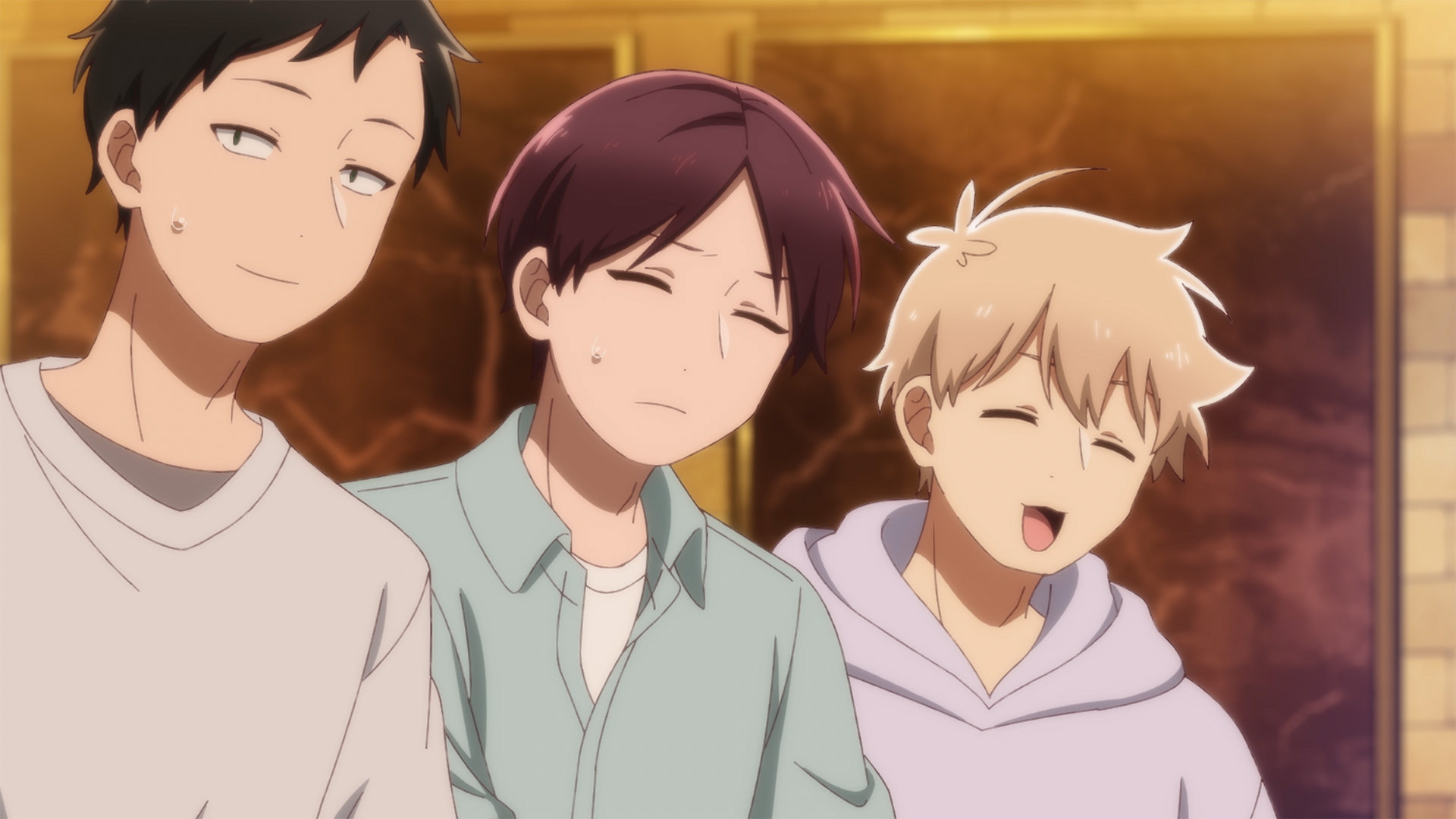
Overall, How I Attended an All-Guy’s Mixer seems like a missed opportunity. Its unique setup and focus on a dansou bar could have opened this particular aspect of Japanese culture to a wider western audience while providing commentary on gender and social issues in Japan. Yet it ends up being a safe and uninspired romantic comedy that falls flat on both the romance and the jokes, often getting too caught up in trying to bait a BL-loving audience. It’s not outright bad, but it’s a forgettable experience that lacks any compelling reason to keep watching after the first episode.
Our review copy was provided by MVM.

