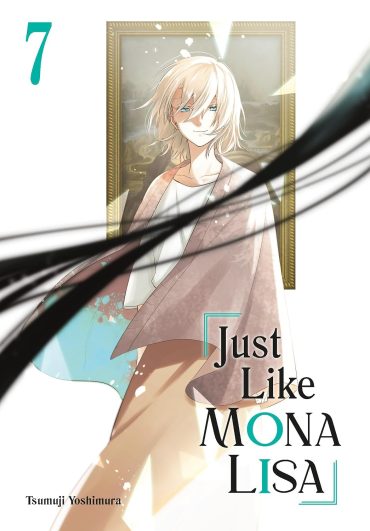
Just Like Mona Lisa Volumes 7 and 8 Review
 Demelza •
Just Like Mona Lisa ran for a total of ten volumes, but the main story actually comes to an end in Volume 8, with the following two books being alternative endings/bonus stories. What awaits our trio of main characters as we reach the end of Hinase’s story? Let’s take a closer look!
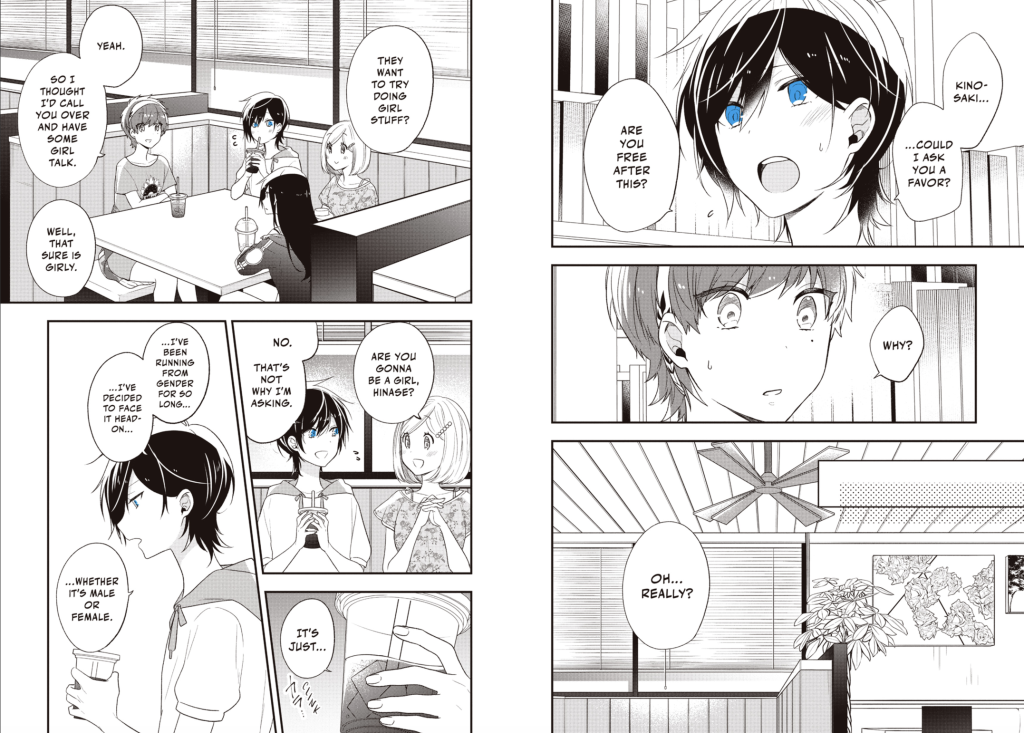
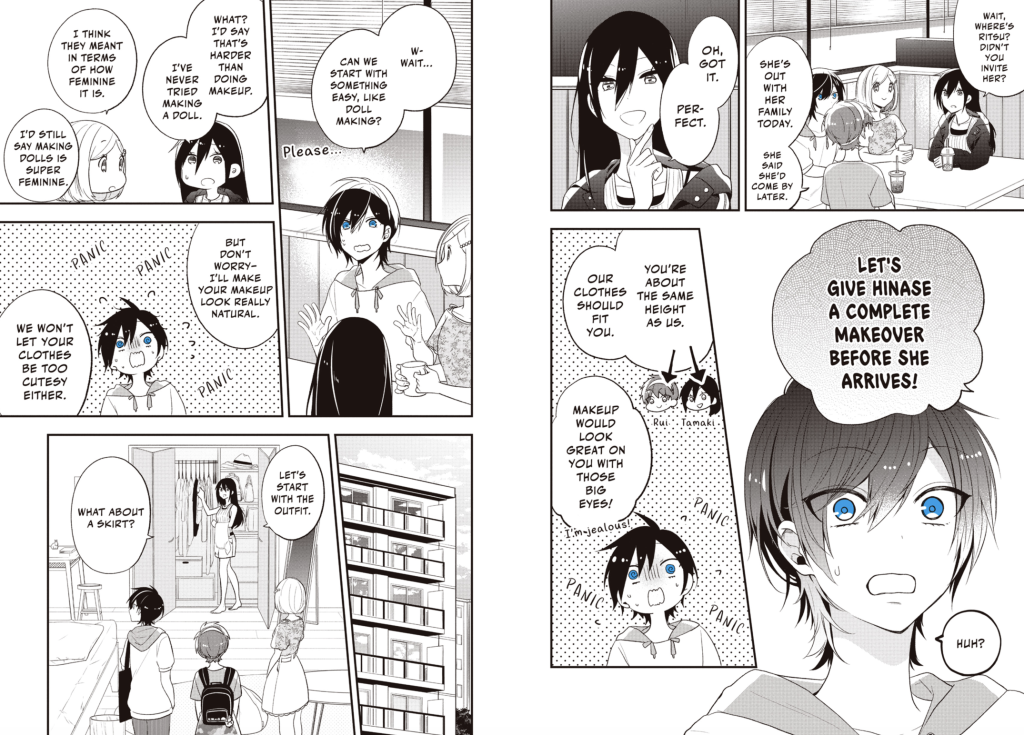
We reunite with our cast as we find Hinase preparing to tackle gender head-on, starting with having a girls’ day with Ritsu and some of their other female friends. Having been scared of becoming one gender or another for so long, Hinase has been avoiding activities that are stereotypically associated with one gender or another, but if they’re going to finally shift away from being genderless, then they want to be fully prepared for what that means. In this case, girly activities amount to having a makeover and baking some sweet treats.
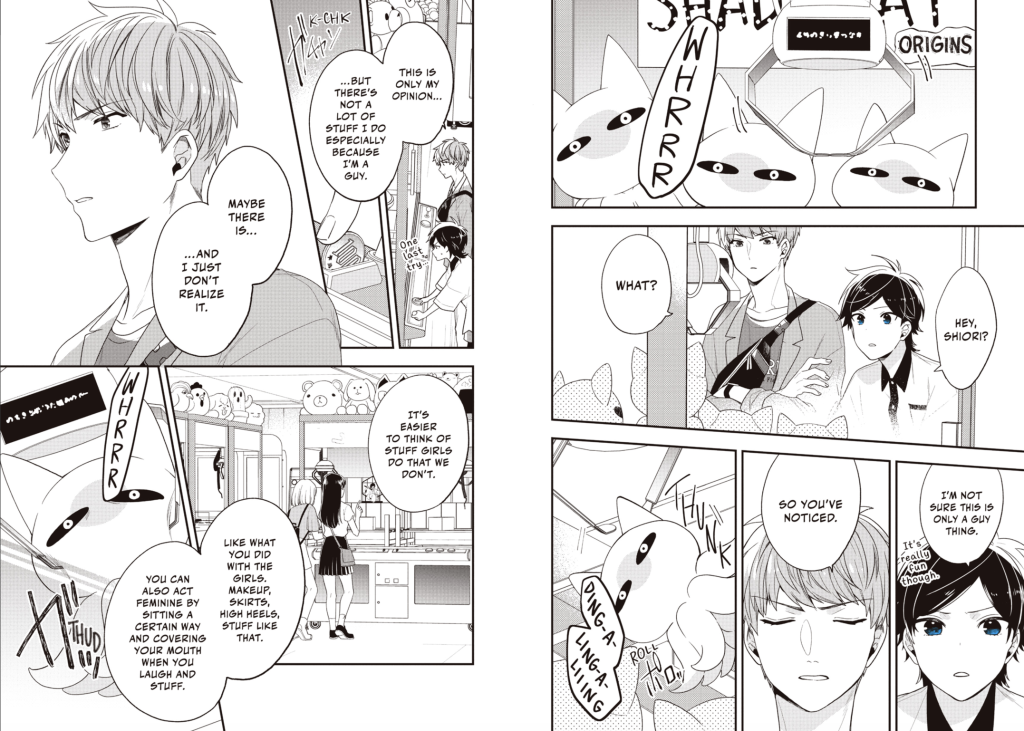
Of course, Hinase wants to try out more male-orientated things as well and turns to Shiori for help with this in Volume 8. The two go to an arcade together and then to an aquarium, which seems like pretty standard fare rather than anything particularly masculine, but Shiori admits that he struggled to think of anything that fit the brief. But Hinase’s time with Shiori and Ritsu has helped them come to a decision about their gender. However, first the school festival looms, and the trio prepare for graduating from high school together.
Sandwiched between Hinasa’s exploration of gender activities is also the rest of the story from Nao (whom we met much earlier in the series) about Lisa, another genderless individual who had made it into adulthood before tragically passing away. All this time we readers have been left wondering if that was due to their inability to transition into one gender or another, and now we finally get the answers we’ve been waiting for.
Now that we’ve reached the end of the main story, I find that I still have considerably mixed feelings. Ultimately I really like what these two volumes do in terms of exploring gender, and author Tsumuji Yoshimura does the work to unpack the fact that there’s really no such thing as activities ‘for boys’ or ‘for girls’; it’s just that we humans decided that all by ourselves. It doesn’t have to be that way, and it’s far better if we work to rid ourselves of those assumptions and stereotypes. And that’s the messaging the author has been carefully delivering all series, which is what’s made it such an engaging read over the course of these eight books.
However, in a world where so many people identify as non-binary or genderfluid, I am just disappointed that the ending is one where Hinase does become one gender or the other. It’s left open-ended, with the next two books exploring what life would be like if they became male or female. I’ve felt for a lot of the series that there should be a world in which Hinase can carry on as they were, and I don’t think the author did a good job of justifying why Hinase had to ultimately choose. Especially once we learnt what happened with Lisa.
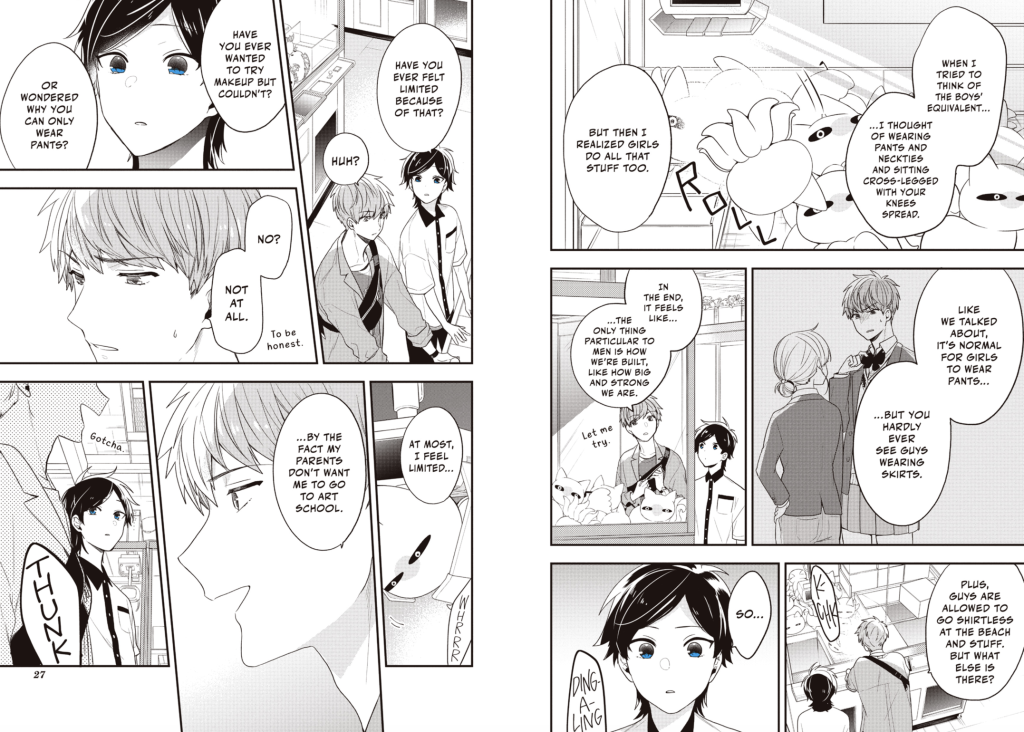
And since this is the main element of the story, it’s not as easy to forgive as it would be if it were some kind of side content (really it’s the side content that has ended up some of the best of the series). Perhaps it will upset readers less if they go in knowing how it ends in terms of Hinasa choosing to become one or the other. I certainly don’t think I could recommend it to anyone without stating that upfront. It’s frustrating when there’s so much good here, but a lot of it feels undermined by the ending. Still, if you’re interested in the premise and are okay with the way it goes, I think it’s still very much worth reading for all the things Yoshimura does right.

These two volumes of Just Like Mona Lisa come to the West thanks to Square Enix Manga and have been translated by Leo McDonagh with lettering by Kyla Aiko. Like the previous releases, these read well and come complete with colour pages and translation notes at the end. Final volumes #9 and #10 are already available in English, having been simultaneously released, for those looking to carry on right through to the end.
Overall, the main story has reached its end, and although I have mixed feelings on it, Just Like Mona Lisa has been a very interesting read. There are certainly missteps with the story in a way that undermines it a bit too much for me, but mangaka Tsumuji Yoshimura has also created something thought-provoking with a lot to say about society and how we identify. It’s important these kinds of works exist, even if they may be imperfect.
Free previews can be read on the publisher’s website.
©Tsumuji Yoshimura / SQUARE ENIX., LTD.
Our review copies from Square Enix Manga were supplied by Turnaround Comics (Turnaround Publisher Services).