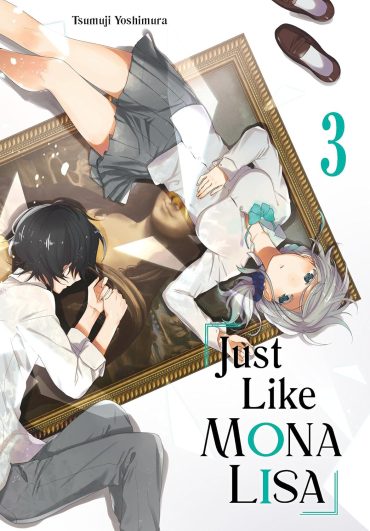
Just Like Mona Lisa Volume 3 and 4 Review
 Demelza •
Over the course of the first two volumes of Just Like Mona Lisa, we’ve watched protagonist Hinase struggle with their identity. Although they’ve reached the age where they should have become male or female, they find themselves still in limbo. Will anything change for them within these next two volumes? Let’s find out!
With childhood friends Shiori and Ritsu more aggressively pursuing Hinase in a bid to help them finally transition into one gender or another, at the end of Volume 2, our protagonist found themselves running away from Shiori and almost getting hit by a truck!
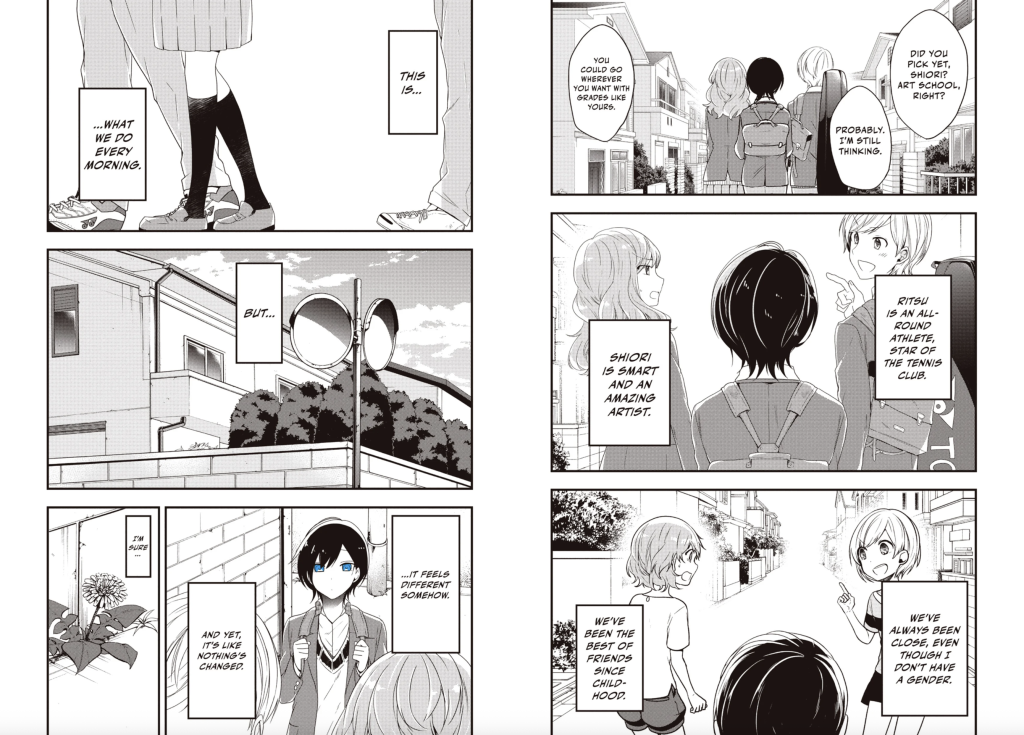
Now in Volume 3, they’ve woken up in the hospital with Ritsu crying about being happy that they’re not dead (the nurse gently interjects that Ritsu was told Hinase had only fainted since they weren’t actually hit). Shiori, meanwhile, rushes to the hospital after being told by Ritsu that Hinase was involved in an accident. Feeling like it’s all his fault for trying to push Hinase into a relationship with him, after making sure Hinase is okay, he begins to distance himself.
But the main theme of this volume is Hinase struggling to come to terms with the fact that they’re growing increasingly uncomfortable around their two best friends. Having been confessed to by both of them, Hinase has begun to see them in entirely new ways, which causes a complex range of emotions.
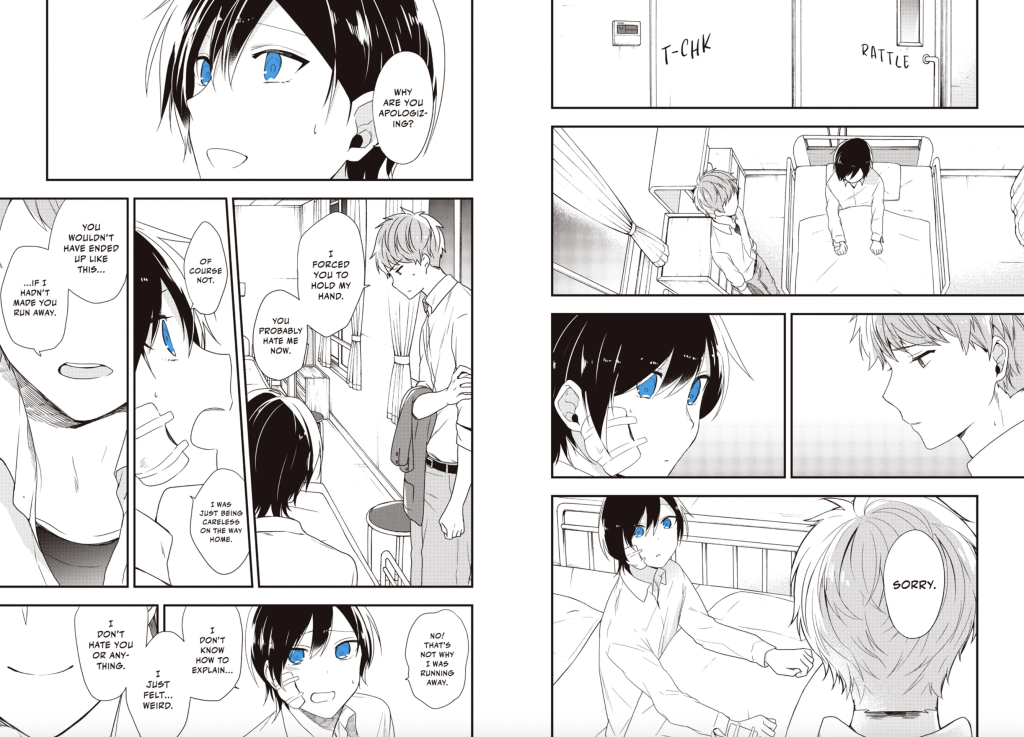
And the main question that plagues them is whether or not they’d feel less uncomfortable around the two if they had settled into a gender, or if this changing relationship is something that would continue to bother them. In many ways, this is the continuation of the themes we saw in the previous book, but it focuses more on Hinase’s perspective than on their two childhood friends.
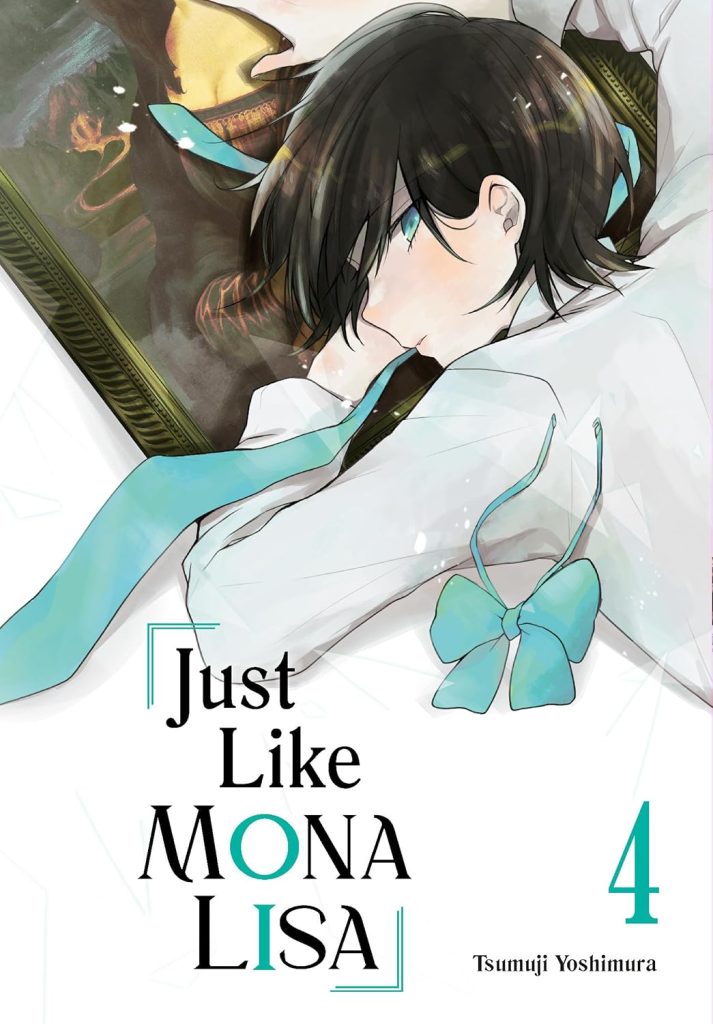
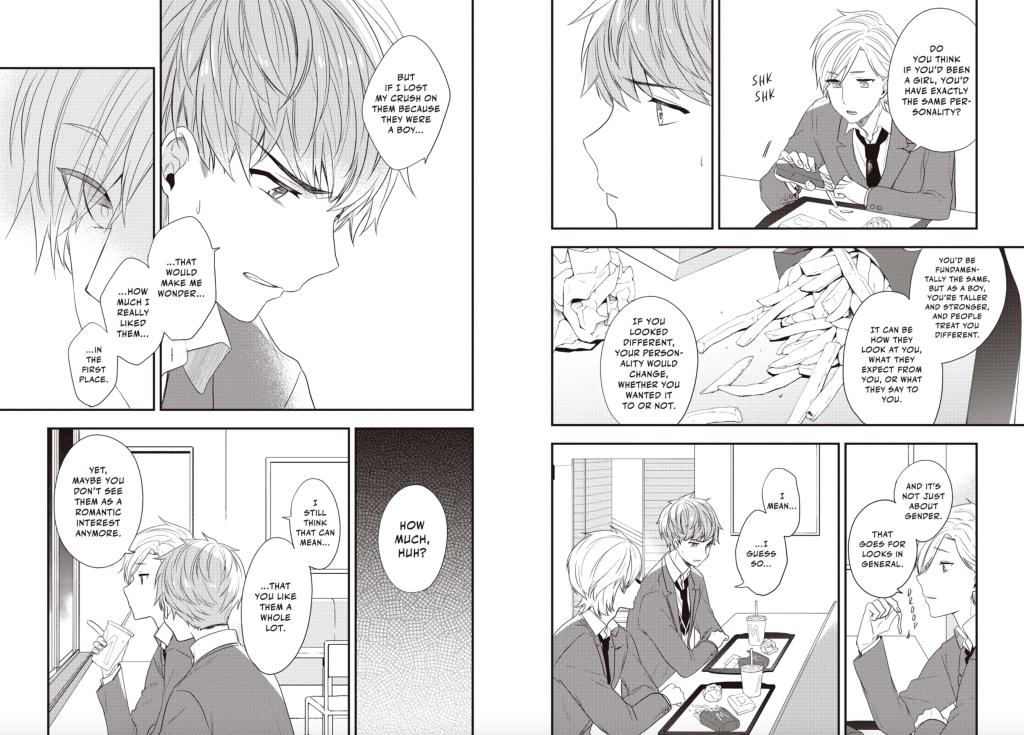
Of these two volumes, it’s #4 that I find more interesting. Here, the focus shifts back onto Shiori and Ritsu, who are faced with the question of whether they’ll continue to love Hinase even if they transition into the same gender as them. This leads into a much wider focus as the story begins to explore how gender can change a person’s personality (the argument being that men and women are treated differently, which shapes who they are in different ways). If Hinase changed, would they become a different person than who they are now?
Shiori and Ritsu soon realise that even if Hinase ends up male or female like them, their feelings wouldn’t necessarily change. It’s hard for them to imagine dating someone of the same sex right now, but the prevailing thought is that Hinase is Hinase no matter what.

And actually, I feel mangaka Tsumuji Yoshimura deserves a lot of credit here because they’ve managed to convey the complex nature of relationships and gender very well (far better than I can articulate it, really). Shiori and Ritsu talk to their friends about their feelings, which leads to us seeing a wide range of opinions on the subject. Some believe that gender doesn’t matter, some admit that if their current partner became the same sex, they might not feel the same way.
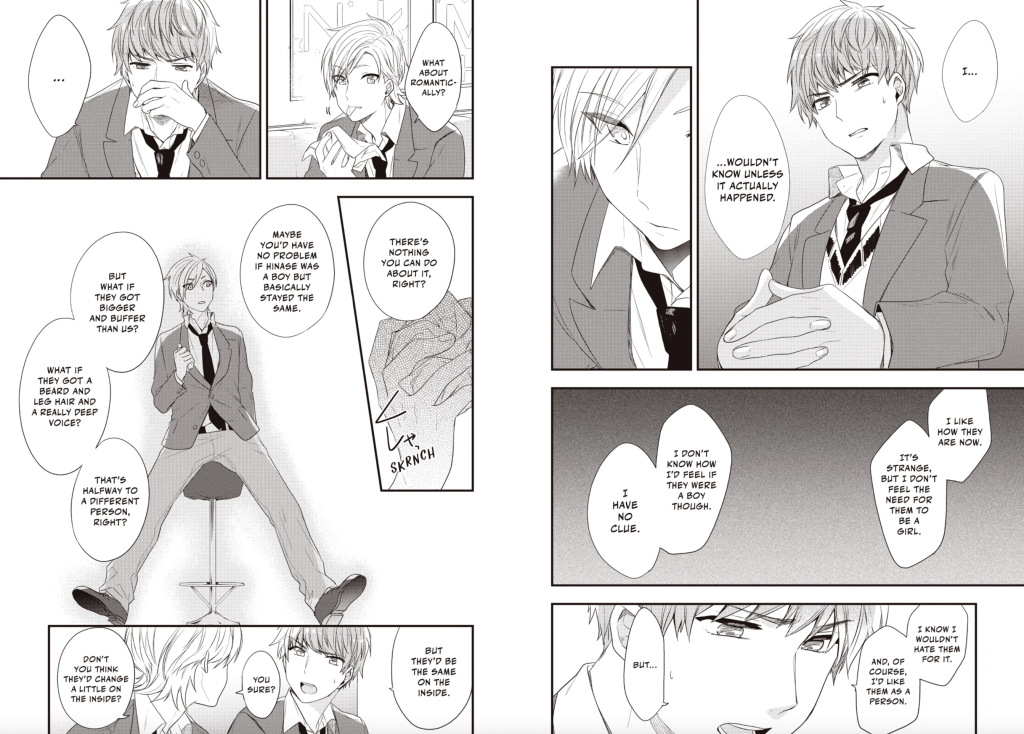
The important thing is that these feelings are never expressed with any kind of disgust toward same-sex relationships. If anything, it almost feels like a celebration of the many different forms relationships can take and that all are welcome and okay. Which, of course, feeds nicely into the wider narrative about gender. It does make me hope that there’s a future in which Hinase doesn’t have to become male or female and can instead live as they are, but we’ll have to wait and see how things develop. Whatever the case, Yoshimura is putting a lot of time into developing the themes of the series and the three main characters in great detail without it feeling like they’re juggling too much or having to shelve any aspects of it.
Just Like Mona Lisa Volumes 3 and 4 come to the West thanks to Square Enix and continue to be translated by Leo McDonagh with lettering by Asher Caswell. As with the previous releases, these are both of a high quality with colour pages to open and the distinct use of blue ink for scenes related to the gender theme.
Square Enix has released Volumes 5 through 7 in English, with the next release being #8 in March. At that point, there will have been quite a large gap as Volume 7 came out in September, but the schedule looks fairly consistent through to the end of the series once we resume.
Overall, Just Like Mona Lisa continues to be an interesting look at society’s opinions on gender, love and all kinds of other things. As we watch over Hinase, who’s still figuring themselves out, and their two best friends left to grapple with their complex emotions, I find myself engrossed with this thoughtful series.
Free previews can be read on the publisher’s website.
©Tsumuji Yoshimura / SQUARE ENIX CO., LTD.
Our review copies from Square Enix Manga were supplied by Turnaround Comics (Turnaround Publisher Services).