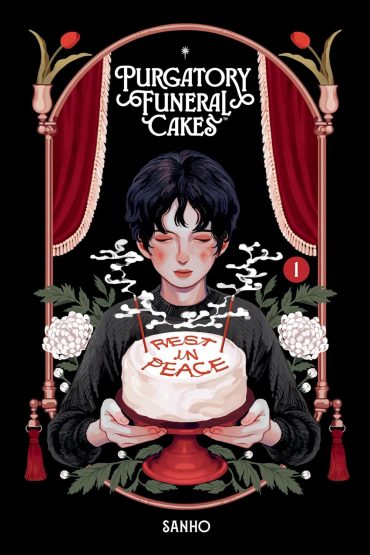
Purgatory Funeral Cakes Volume 1 Review

Mago is a baker, who specialises in cakes for the dearly departed, with her ghostly assistant Miro. The ones still living visit Mago’s bake shop, and share memories of their lost loved ones, so Mago can prepare a cake to help the recently deceased move across the purgatory plains, and eventually be reborn. Volume 1 contains two stories: in the first, a budding novelist tells the tale of a blind woman she read to and has recently passed, the other is of a daughter mourning the loss of her vampire mother.
Sanho is an illustrator and cartoonist with several manhwa to their name, including Rain and Swimming, and Nanani in a Glass Bottle. This is their first series translated into English, but according to their Instagram, this is also the first series published as a cartoonist, and it’s currently at three volumes in Korea, with at least two volumes promised by Dark Horse.
During my first read of this book, I couldn’t help but think of Pet Shop of Horrors, which seems like an odd comparison but there are a few connections. Both series have a ‘shop’ selling goods as a backdrop, but the main plot is episodic stories centred on their customers instead, and both are set in modern supernatural worlds, where the likes of mermaids and vampires actually exist. That’s where the similarities end however; Pet Shop of Horrors leans into the, well, horror side of things, using the human folly of ‘be careful what you wish for’ to tell supernaturally-led horror tales. Purgatory Funeral Cakes however is more melancholic in nature, and instead centres on the loss of loved ones, and what we remember of them when they pass away.
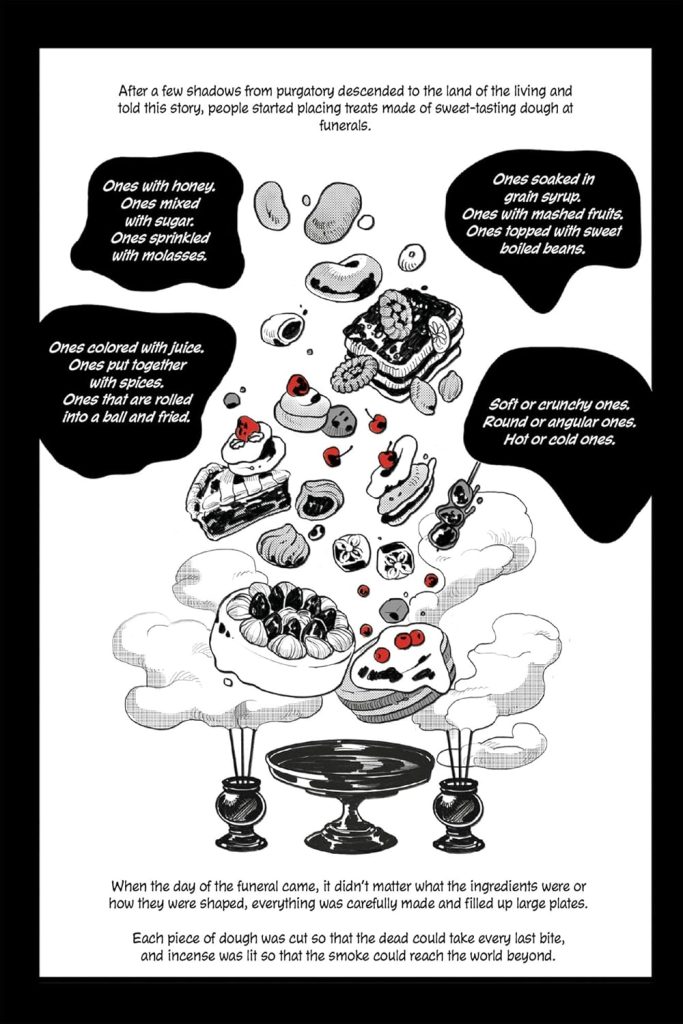
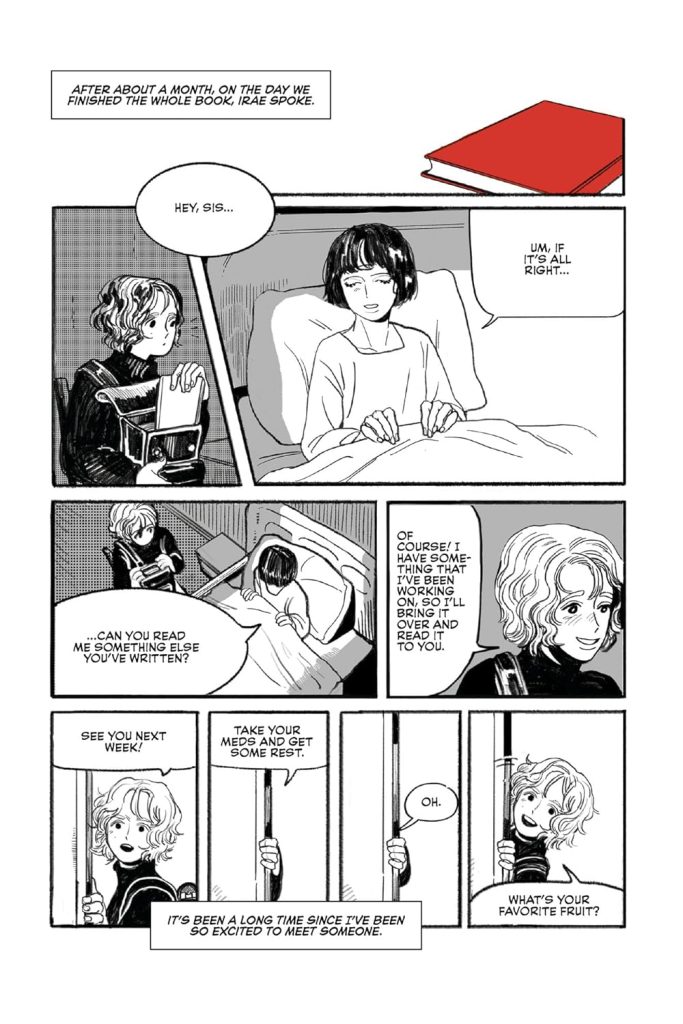
The book is quite generous with its content, with a prologue explaining the concept of purgatory plains and the purpose of the cakes, as well as two bonus chapters and two main stories from the manhwa itself. The first story, centred on the novelist and the blind woman she reads books to, feels the most complete and is a strong opening chapter. We start from the novelist’s point of view: how she came to be reading stories at the hospital to patients, failed to get her own book published and then grew closer to the blind woman before passing. Then in the second half we get the story from the blind woman’s perspective, who happens to have three eyes and a supernatural ability to see into the future, showing how much abuse she received in her life to end up in the hospital in the first place and the eventual meeting. It’s a very touching tale, of two souls lost in their own way but who find comfort in each other, with the cake baking containing ingredients mentioned throughout the story and being a symbol of their connection.
The second story is one of a daughter struggling to come up with ideas/ingredients for her mother’s cake, as her mother was a vampire and she felt she barely knew all of her, due to the time difference of her mum waking up and going to work just as her daughter is going to bed. The distance and the feeling of not really knowing your parents is relatable, as one person can only know another from what they experience, and as a child you tend to idolise or put your parents on a pedestal, therefore that feeling of not knowing all of who they are, especially after they have passed, can be overwhelming. The story is nicely told, I did wish we get a switch of POV to the mother as well, especially as a vampire and having to raise a child who can go out in the daytime.
The supernatural elements are an important part of the story, especially the context of what the purgatory plains are and how the cakes baked in the living world help them in the world of the dead, but the story doesn’t weigh itself down to explain how they are known or accepted in the real world. We’re shown the ghostly assistant helping the baker, including bony arms and a sheet covering their body, but they’re treated like any other baking assistant. The vampire aspect of the mother in the second story isn’t given much context to develop outside of having fangs and not going out at night time, but that didn’t stop from the eventual decline in health which hits hard for both the daughter and the reader. Then there’s the baker herself, Mago, who’s a kind soul who helps the living honour the memory of their deceased, but also has a mysterious side to them too that’s revealed at the end of the first volume…I obviously won’t say what it is, but the whole cosy vibe of this supernatural tale will appeal to anyone who likes occult stories centred on human emotion and experiences.
Sanho illustrates this book themselves, and it’s a very unique and stunning art style. The main colours are black and white (as most comics are) but also red. A very striking colour but it works wonders in this book; it brings out the vibrant strawberries and food colourings of the cakes, serves as a sunny backdrop to the meetings Mago has with her customers, and also brings out the supernatural crow gods we see at the beginning in a vivid way, showcasing their powers and influence over the dead. Red isn’t used on every page, but when it is, it’s for a particular purpose, to highlight what’s on the page or made the characters pop out more in a particular panel.
Purgatory Funeral Cakes is a lovely baked tale of loss and grief, topped in a sweet frosting of acceptance and love. Its unique art style and storytelling will be gripping for those who like slower paced, emotional supernatural stories.
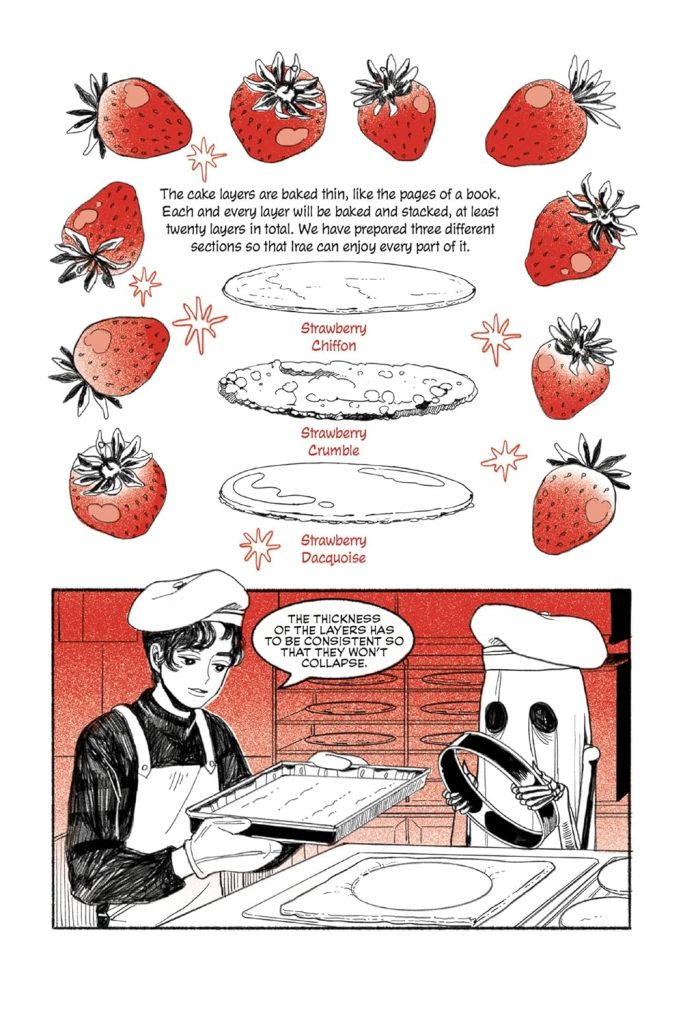
Preview pages of Volume 1 on Dark Horse’s website.
Our review copy from Dark Horse was supplied by Turnaround Comics (Turnaround Publisher Services).