A Starlit Darkness Volume 1 Review
 Sarah •
Content Warning: Suicidal ideation
“Write. Hit me with all the misery you have rotting away inside of you… and slay me with your pen.” Geppo to Subaru on their first meeting.
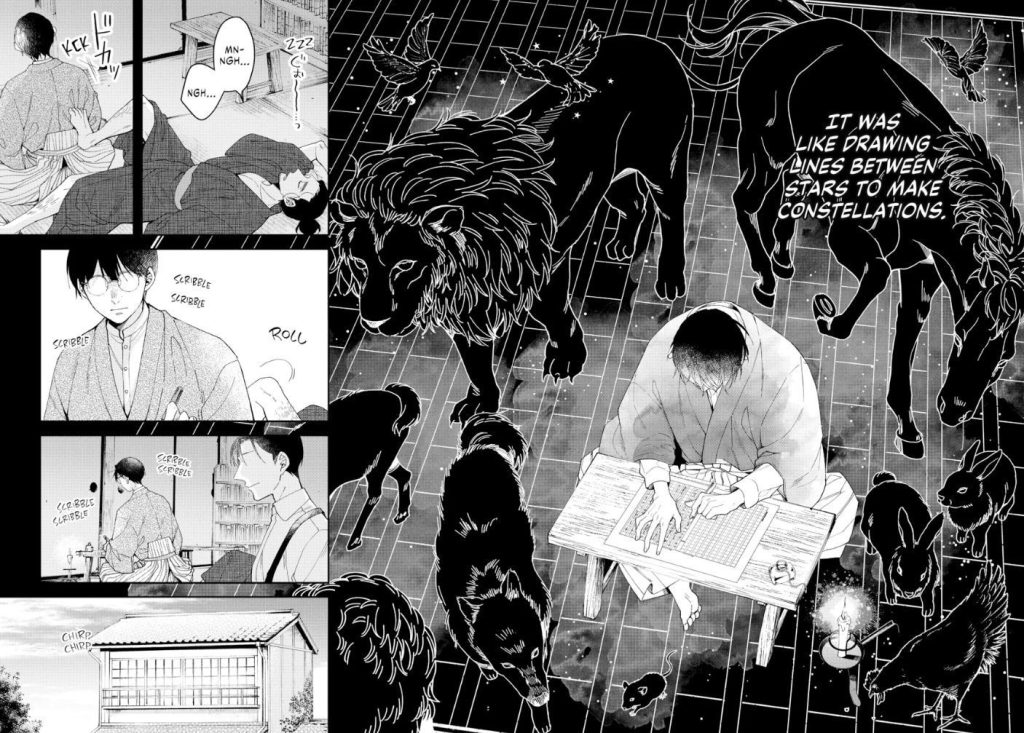
In 1920s Tokyo, aspiring author Subaru Karasuma has lost the will and inspiration to write. Badly in debt, he’s run out of options and is contemplating how to end his life when he happens upon a literary group next door busily engaged in writing short stories for a magazine deadline. Then the leader of the group, Geppo Yagira arrives. Geppo is everything Subaru once aspired to be: a good-looking, successful novelist – and he’s the one that insists Subaru stay and contribute the vital seventh story to his collection. Subaru refuses – but Geppo offers to pay him if he writes the story, goading him into accepting the challenge. Next morning, a bleary-eyed Subaru presents his work. Meeting Geppo has reminded him of the deep-seated professional jealousy he’s always felt toward him, and he’s written all night, determining that he’s going to prove that his stories are better. It was like drawing lines between stars to make constellations. Geppo is pleased with his contribution (although not ecstatic) and the men in the group go off to the bathhouse, dragging Subaru with them, then inviting him to join them for a meal. Geppo even offers to pay back his loans if he continues to write for the literary group.
But why has Subaru – once hailed as a promising young writer – lost the will to put pen to paper? He’s lost his muse. Infatuated with a young actress called Tsubaki (Camellia, also the title of one his stories), he watched her in every production she was in until the fateful day the theatre closed down and was turned into a cinema, Genkikan, the first cinema in Tokyo. Unable to trace his adored Tsubaki (whom he’s adored from afar) he stops writing. And even now he’s been recognized by Geppo and his literary group as the promising young mystery writer he once was, he goes to work in a cement factory rather than face the challenge of an empty page. Until one evening, Geppo invites him out for a drink and on entering the bar, they’re greeted by a charming young hostess. Subaru can only stand and stare, speechless, as she’s none other than his beloved muse: Tsubaki. How has Geppo managed to trace her? And, more importantly, can he find the courage to talk to her?
It’s a brave move for an author to choose to place a flawed (and not obviously sympathetic) character in the leading role in their new work but Yuu Toyota (Cherry Magic!) is skilled enough to not only pull this off but also to entice us into Subaru Karasuma’s dark, warped view of the world. It’s understandable that the mangaka would be eager to write something very different from her charming tale of two salarymen falling in love – and this bold move really pays off on several counts. The setting – 1922, in the Taisho era – is a fascinating choice, showing Japanese society in a state of rapid change, with the coming of commercial cinema etc. 1922 might be a significant date also, because this is Tokyo and the Great Kanto Earthquake happened in 1923 (not to try and second-guess what’s going to come in later volumes but it’s impossible not to take that awareness into consideration).
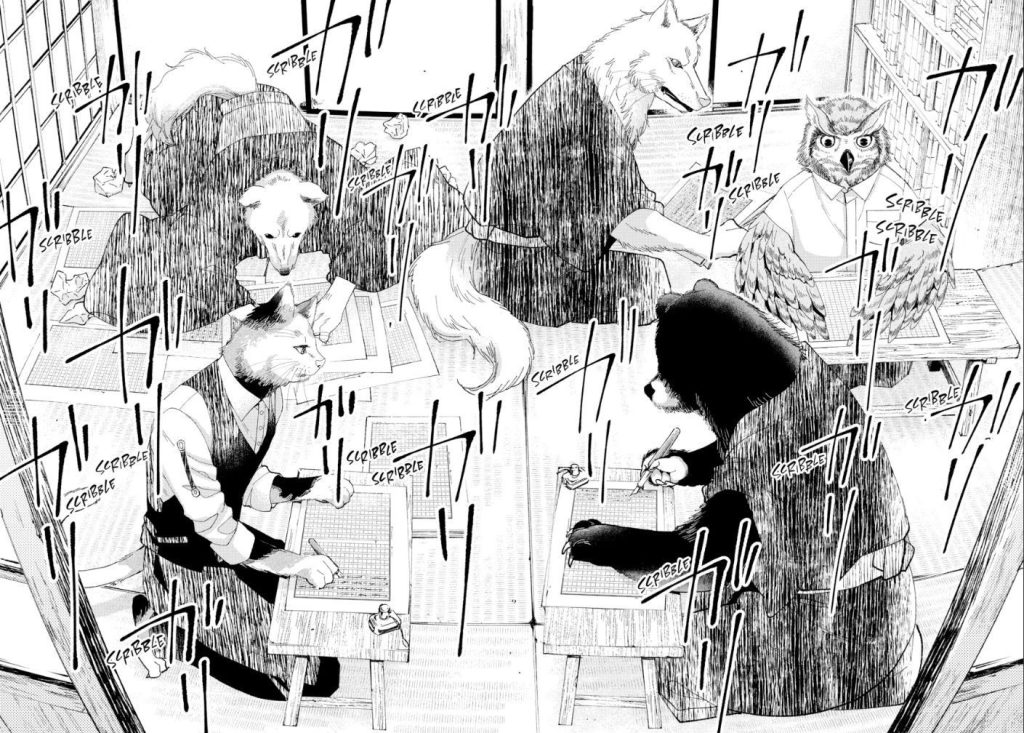
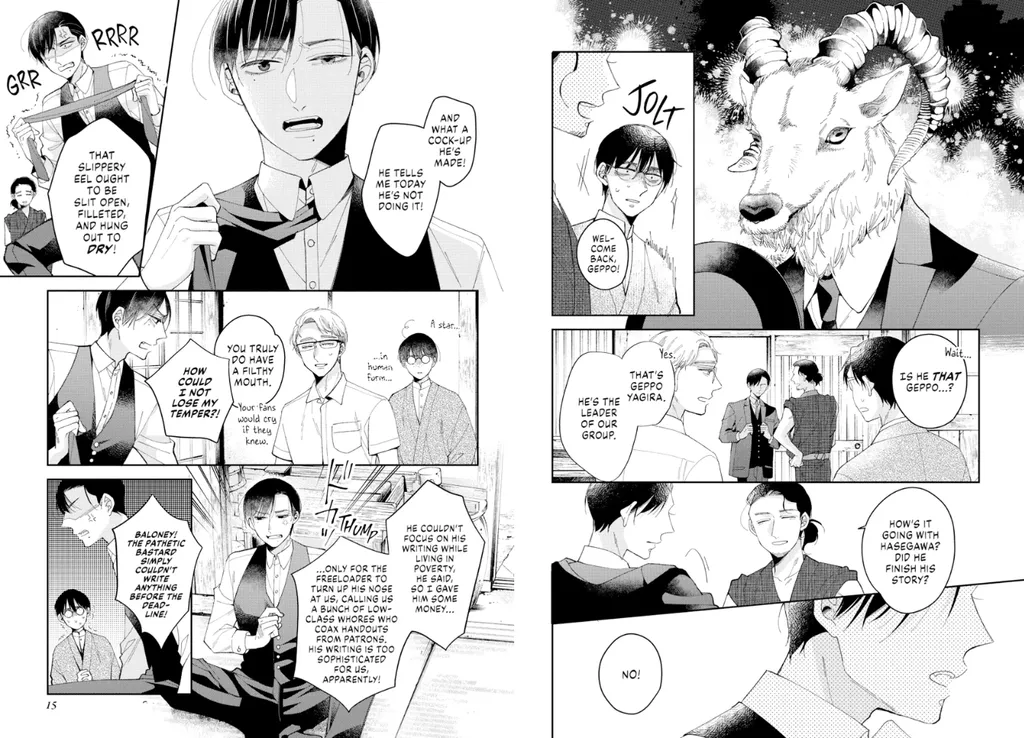
Subaru, like many flawed fictional protagonists, demands our attention – but, because of his insecurities and his idiosyncrasies, is far less sympathetic than the mangaka’s other novelist character, Tsuge in Cherry Magic! who is a good friend to Adachi as well as being a successful writer (even if he is rather naïve in matters of the heart). Yuu Toyota uses intriguing imagery to get inside Subaru’s head: when he first sees the literary group hard at work writing, they all look like anthropomorphized animals to him – and when Geppo makes his first appearance, Subaru sees him with goat’s horns (not unlike a Western depiction of the devil incarnate).
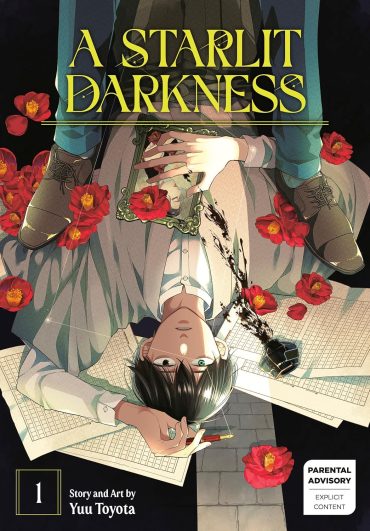
Yuu Toyota delivers a page-turning read (as hoped!) as she unfolds Subaru’s story through cleverly-timed reveals with the occasional full-page and even double-page spread for significant story moments. She captures Subaru’s depressive state very well – and the second chapter when he remembers Tsubaki dramatically lifts the mood. She’s also obviously enjoying drawing a female main character who (when an actress on stage) wears many different costumes and hairstyles. The city backgrounds with trams help to establish the period feel as well as the clothes. Yuu Toyota’s art style has always been very distinctive but even though you can instantly tell it’s the same mangaka that created Cherry Magic!, the story and the characters are different enough for this not to be a distraction. The cover art is gorgeous, showing Subaru surrounded by crimson camellias, spilled ink and scattered pages of his manuscripts. Who is that standing over him? We can only guess…
Square Enix Manga have brought us an attractive trade paperback-sized volume for this new series and there’s a colour image at the front. The excellent translation is by Kiki Piatkowska with lettering by Rebecca Sze and Arbash Mughal. There’s an afterword by the mangaka including some early character sketches and a very helpful page of translation notes.
The final chapter sets the scene with an ominous revelation for what’s to come in Volume 2 which is due out in September; I can’t wait! Recommended.
A free preview can be read on the publisher’s website here.
Our review copy from Square Enix Manga was supplied by Turnaround Comics (Turnaround Publisher Services)