
The Failure at God School Volumes 2 and 3 Review
 Demelza •
When The Failure at God School made its English debut last year, I found myself a bit conflicted about it. I’m a big fan of author Natsu Hyuuga’s work (not just Apothecary Diaries), but this one felt bogged down with too much happening. Nevertheless, there’s always a chance to turn that around, so with another two volumes now available, let’s see if anything has changed.
As we reunite with the cast, we find Nagi in the middle of the school wilderness survival camp. Here the students are tasked with collecting stamps through solving challenges with their supernatural abilities. However, with Nagi still none the wiser as to what her power is or how to use it, all she can do is support her teammates from the sidelines. And that support is invaluable, but it might not get her through everything that lies ahead.
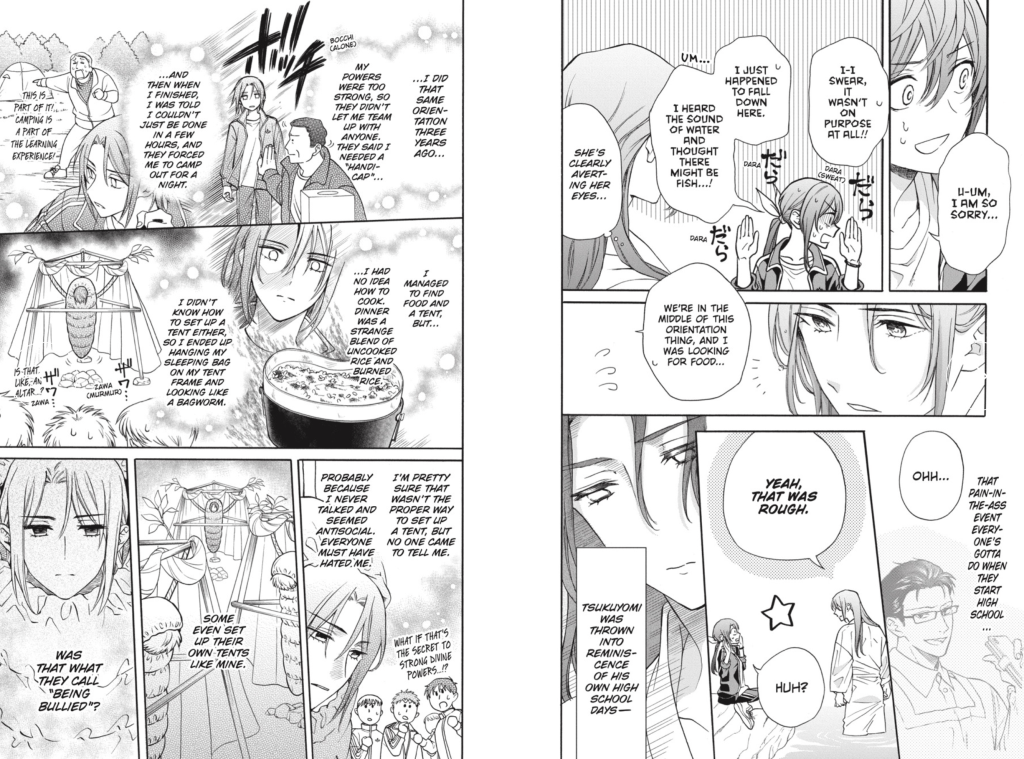
The camp isn’t just about collecting the stamps; it’s also about teaching the students to work together in a group. They’ve been placed with other students whose powers complement one another, giving them a better chance at succeeding. But in Nagi’s group there’s a boy called Touta who stubbornly refuses to work with them. While the others feel it would be better to ignore him, Nagi’s experience with her brother tells her that she shouldn’t give up on Touta. Surely he will come through when it matters most?
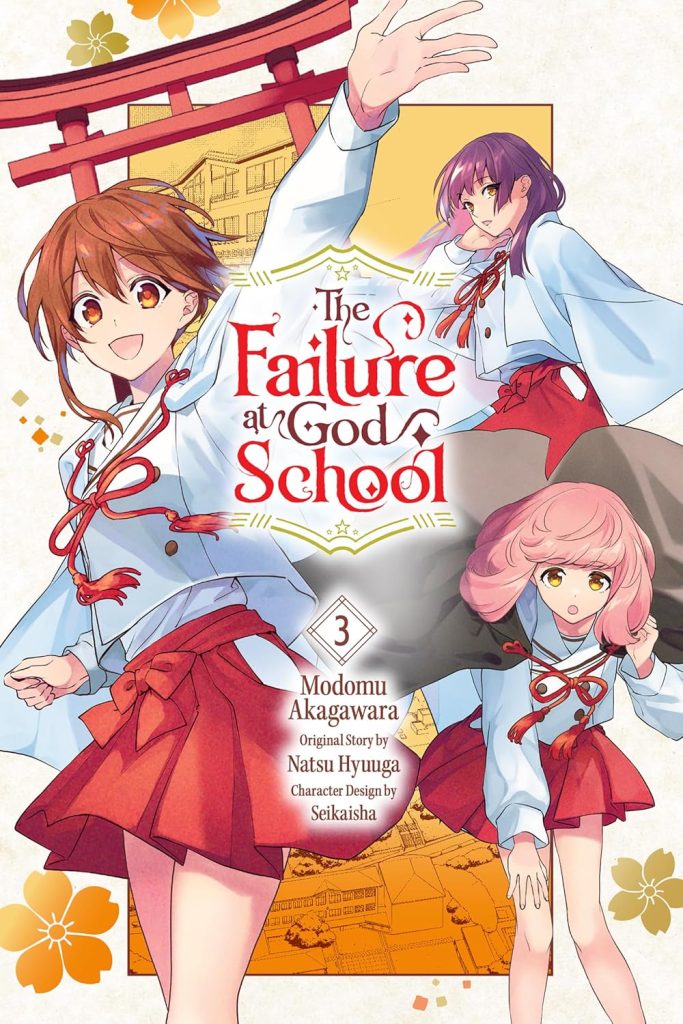
While Volume 2 is all about the school camp, it’s Volume 3 that dives deeper into the setting and puts Nagi and us readers through some intriguing twists. Now back at school, midterms are right around the corner, and Nagi is hoping Touta (whom she’s become friends with) will help her study. But Touta ends up mistaking the doll Nagi’s brother communicates with her through as a cursed object and quickly destroys it. He argues that he saved Nagi’s life, but she’s none too pleased and heads home on the advice of the headmaster who gives her a letter from her late grandmother.
All these years Nagi believed her brother was a simple shut-in who used the doll as a way to continue communicating with her, but was that really the truth? There’s something much bigger afoot, and Nagi is about to learn that there is a lot more to her family than she first thought. And finally for us readers, we’ll come to understand the hook of the series.
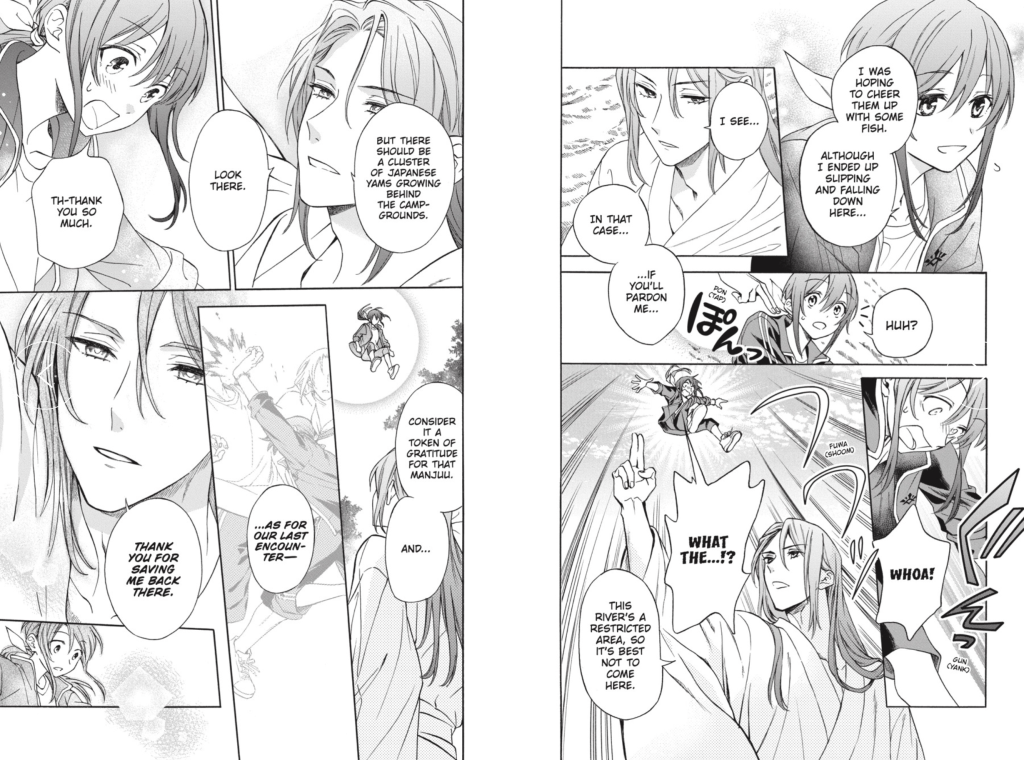
If this were a light novel, as Hyuuga usually writes, I’d wager that the content of Volume 3 would be equivalent to the climax of a first novel. We know the manga was created before the first light novel version was released in Japan, but it feels like the same pacing to me. And in that case it would have made for a great first volume, but here in manga form there’s no escaping the fact readers have had to stay invested for the long haul for any kind of payoff, and that’s not great. Especially when the first instalment had so many teething issues and there has been a long gap between volumes here in English.
Still, if you have stuck with it this long, I think it will now successfully have you on the hook for the long run. Hyuuga is a talented writer, and now that we have more world-building and have gotten to know the characters better, it feels like the whole thing is finally coming together. I still feel pages can be overwhelmed by text and suffer from panels being too small, but I’ve also started to get used to the somewhat chaotic atmosphere of Modomu Akagaware’s artwork.
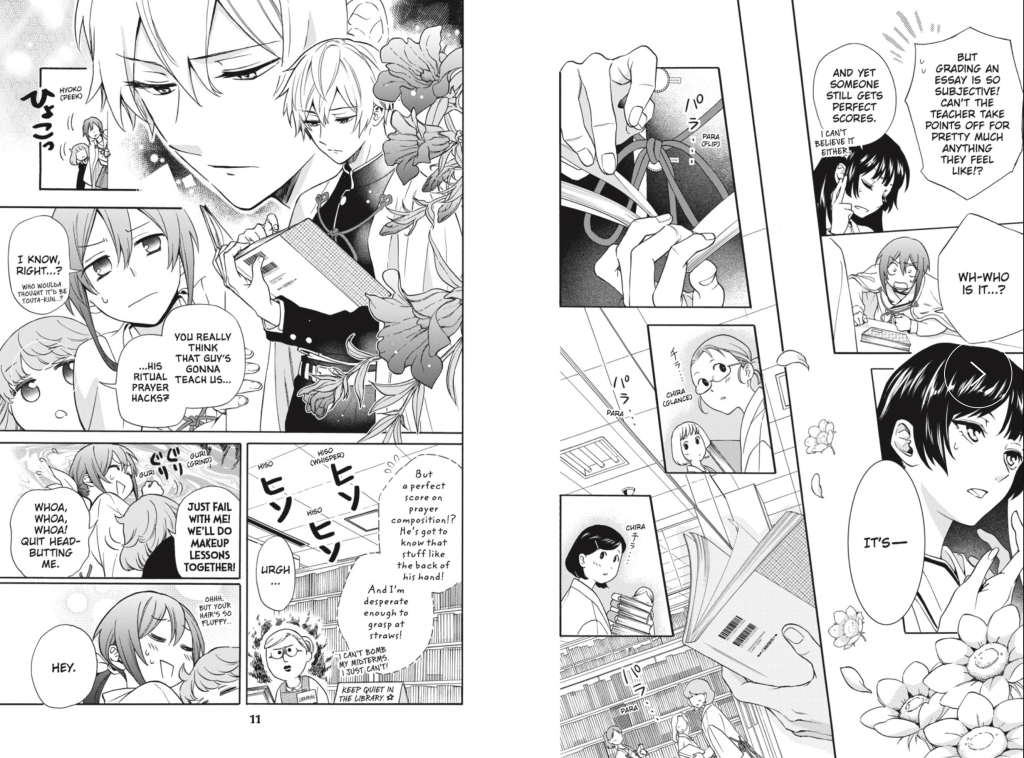
The Failure at God School Volumes 2 and 3 come to the West thanks to Yen Press and continue to be well translated by Yumi Tanaka, with lettering by Madeleine Jose. Both releases read well, and although neither includes colour pages, they do have extensive translation notes at the end and a selection of character profiles at the beginning (important for remembering who’s who!).
Volume 4 is currently scheduled for an English release in September, but after that there’s nothing else scheduled right now. Given the series is up to 14 volumes in Japan, it’s disappointing to see the schedule has slowed down so much. Although a lot of Yen Press titles are in a similar boat (Honey Lemon Soda is another example), so it’s not a problem unique to this.
Overall, The Failure at God School has taken a while to find its stride, but as of Volume 3, I think we’ve finally gotten somewhere. And that may be too long for some readers, but if you’re an avid fan of Natsu Hyuuga, then I’d certainly encourage you to stick it out.
Free previews can be read on the publisher’s website.
Our review copies were supplied by Yen Press
© Natsu Hyuuga / Modomu Akagawara / Seikaishia / Hakusensha