Sayuri Review

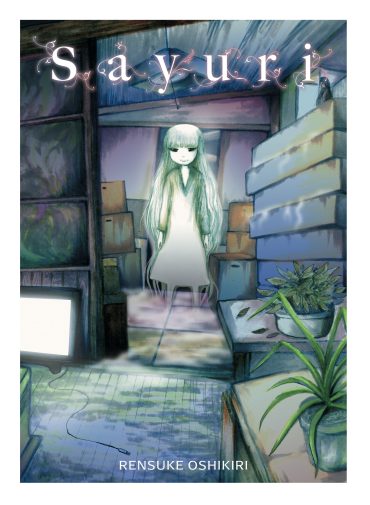
The Kamiki family have moved out of their tiny apartment, into a new house on a hill that’s big enough for the whole family, including grandma and grandpa. What starts off as a dream home however, slowly morphs into a house of nightmares. There are unexplained noises, TVs turning on when they’re unplugged, and it’s not long before horrific things start happening to the Kamiki family.
Rensuke Oshikiri is a veteran mangaka, active since the early 2000s with one of his most popular series High Score Girl (Square Enix Manga) already available in English. He’s most famous for his comedy works, but according to the afterword of this omnibus edition of his horror manga, this is one of his favourites. The story came out of his frustration with horror movie endings, not providing an emotional cathartic ending where the humans are able to ‘get back’ at the evil spirits and such. I can understand his frustration, as it’s quite common to have a twist at the end of horror movies, where the evil spirit is still at work, and the protagonist’s work is mostly for naught, or only a temporary relief.
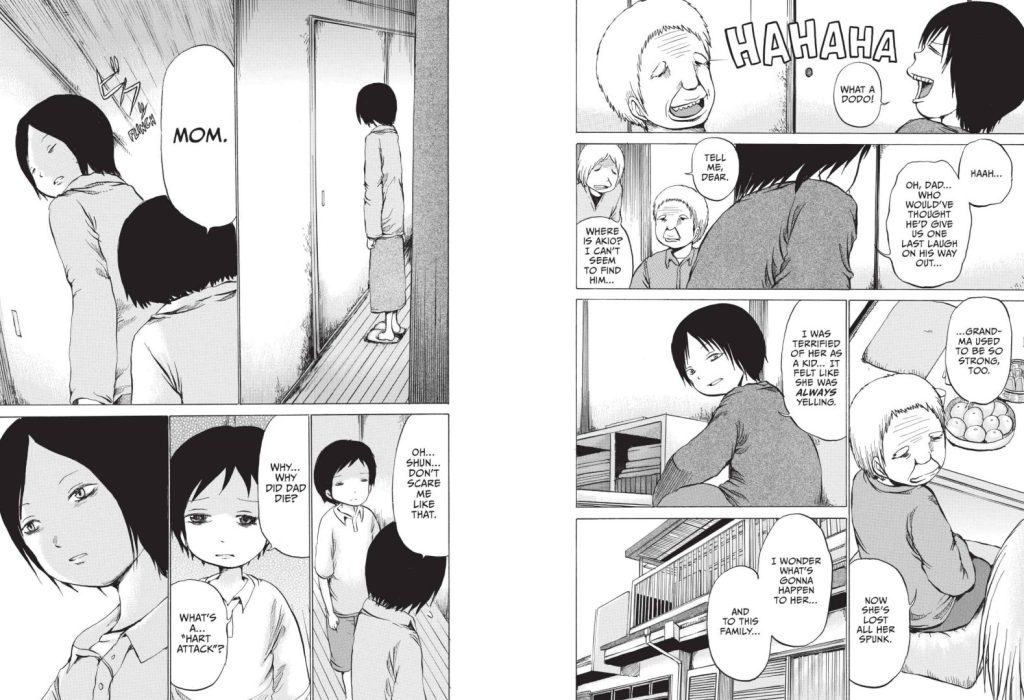
I didn’t go into this book with that knowledge, but it did provide nice context to the ending, which I did enjoy overall. If you’re a horror veteran, and want something a little different from the rest, Sayuri is worth exploring. It should be noted that the horror aspect of this manga starts off quite quickly; normally in horror films you would have a build-up of tension such as an occasional noise, the neighbours sending ominous warnings, seeing brief glimpses of the ghost, etc. But here there’s a collection of small sounds, and the first horrific thing happens by the end of Chapter 1, and it doesn’t let up from there onward. Normally, this would run the risk of having it too ‘full-on’ to the point of feeling numb to the horrific events happening, but I think Rensuke Oshikiri manages to keep a nice balance and the audience engaged until the end. First of all, the main point of view for the story is the young boy of the family, Norio, and so he doesn’t watch all the deaths happening at once, some of it happens when he’s at school or not around, and some members seemingly go ‘missing’ rather than outright dying, so it’s not a conga line of horrific deaths to throw the audience off.
Also, Norio has a few scenes outside the house, to keep the locations varied but also provide a different point of view; one of his school friends can see spirits but as they’re both kids, their involvement in solving the case of what happened in the house is only part of the story. As they’re both young, they can only do what they can and so lean on an adult to fill in the rest of the mystery. The adult in question is the grandmother, who I will say is a badass old lady that I hope to grow up as one day; she’s very much a vessel for Rensuke Oshikiri’s frustration with horror films, in that she’s not afraid to go face-to-face with evil and make them pay, despite her old age. In a way, she’s the true protagonist, and arguably loses the most in this story, but it’s the balance of her courageous nature, and Norio’s curiosity and fear that ends up balancing the story nicely.
As for the evil spirits that lurk within the story, there’s a nice build up to who it is and what happened in the house, I also like the theme of keeping the ‘flame of life burning’ (as the grandma puts it) to be the ghost’s weakness. I’ll try not to spoil, but basically the ghost’s whole life was trapped in the house, so it makes sense that Norio is able to fight it off for a period if he doesn’t give into despair or stay in the house; seeing other people outside the home, exercising, living life and keeping his house clean and organised keeps him alive in the darkest moments, whereas the family he loses end up succumbing to despair because they refused to leave the home for long stretches of time, therefore becoming the house’s victims.
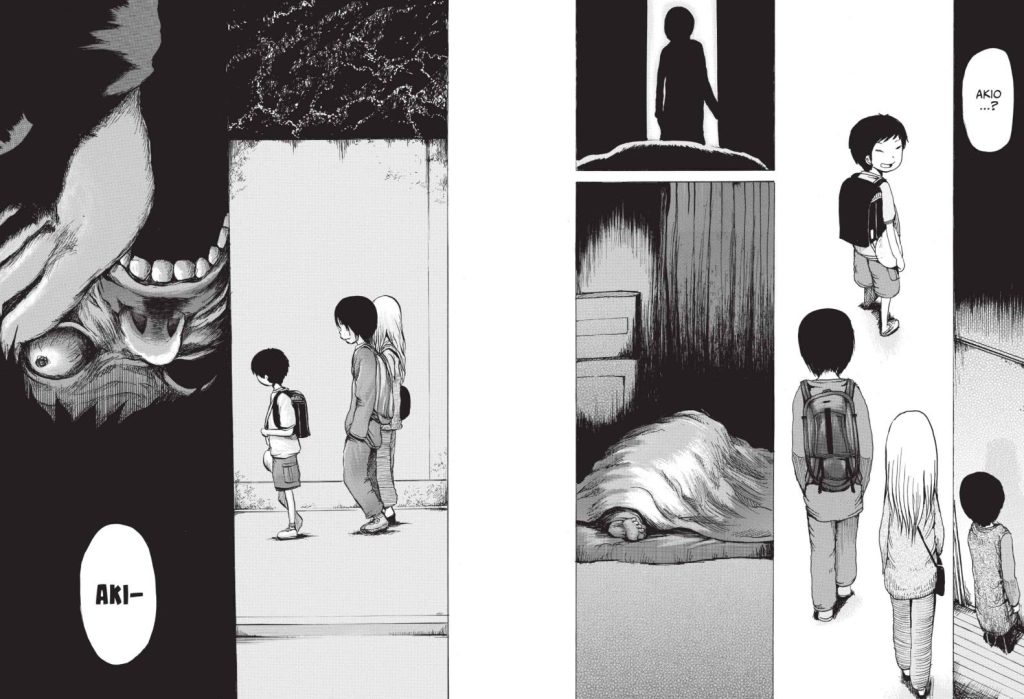
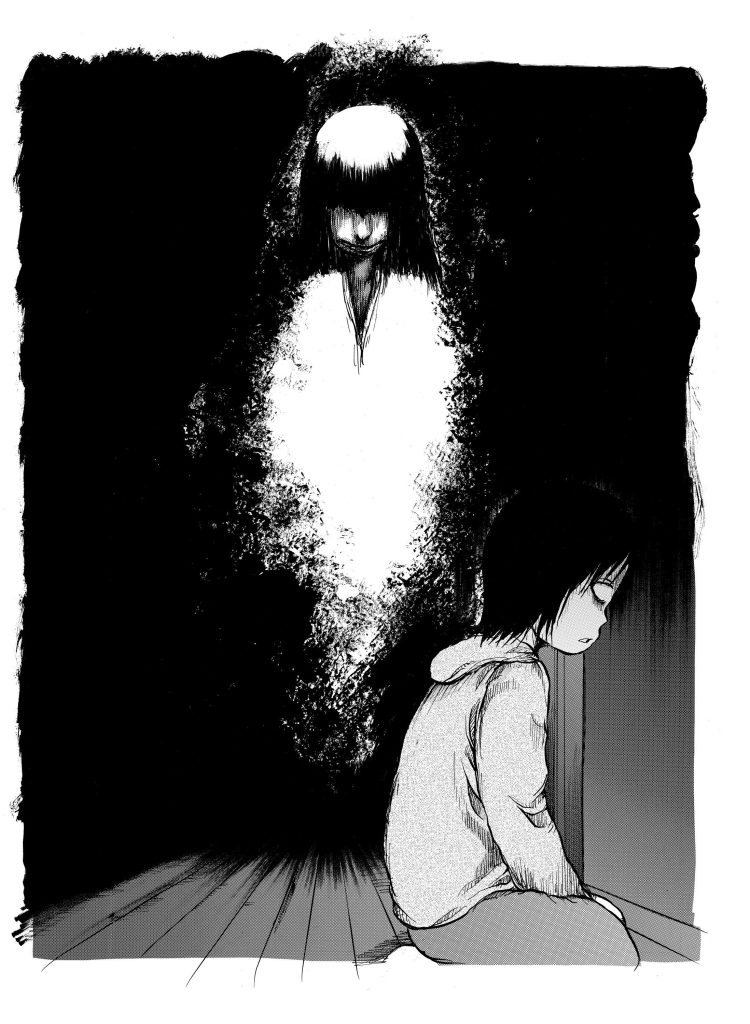
The atmosphere and scare factor of the story are also well managed and built up over the book; the mangaka does tend to rely on similar horror faces across the book, but in the second half they’re often implemented and overlap with other scary moments to make them work in different context. I didn’t get scared myself, but I like the vibe the book has and the details of the scary faces drawn.
Speaking of art, Rensuke Oshikiri has a unique style, with oval-shaped eyes and faces that are rounder than usual. It’s unique for sure, and I admit I did not enjoy it in this volume. The faces often end up looking very similar to each other; Norio’s face literally looks the same as his mother’s and another classmate’s. Usually I’d use hair styles or clothing to help tell them apart, but the clothing is often plain which doesn’t help, and most of the characters have similar hair styles as well. Only one member has long white hair, but that doesn’t help as they’re not the main character. Rensuke Oshikiri does have a knack for drawing older faces however, it’s rare to find that ‘puffy’ eyelid look that some elderly people have translated well onto paper.
Translation by Yuki Tejima for Vertical is a good read; there are no translation notes but I did appreciate the afterword provided.
Sayuri is a entertaining horror manga that does something different with the typical endings you get in the genre. Its scare factor is commendable, but if you’re looking for horror manga that’s a bit different from it’s peers, check it out.
Read a free preview on Kodansha’s website now.
Our review copy from Kodansha (Vertical) was supplied by Turnaround Comics (Turnaround Publisher Services).
Sayuri © Rensuke Oshikiri/KODANSHA LTD.