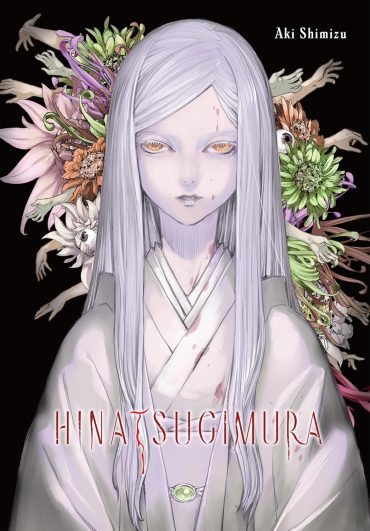
Hinatsugimura Review

High in the mountains, there are rumours of a demon taking the face of a beautiful woman that kidnaps people and they’re never seen again. The legend has endured for centuries, and many of the locals refuse to climb the mountain. But thrill-seekers come to the mountain anyway to see if the legends are true. What’s the real story behind the mysterious woman? Are the people actually ‘spirited away’? And will the disappearing ever stop?
Hardcore fans of the video game series Suikoden may recognise the mangaka’s name, as Aki Shimizu is the artist behind the manga adaptation of Suikoden III. She’s worked in several other game series before, but she eventually moved over into manga in the late 90s/early 2000s and specializes in drama and supernatural stories. Hinatsugimura is one of her more recent stories and the first one to be published in English.
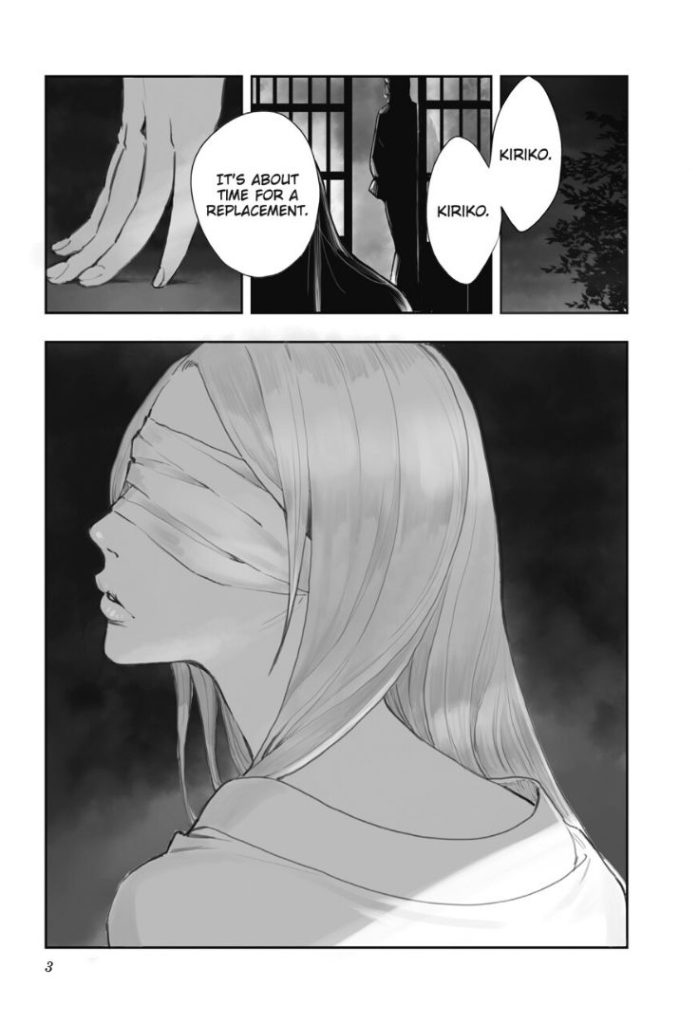
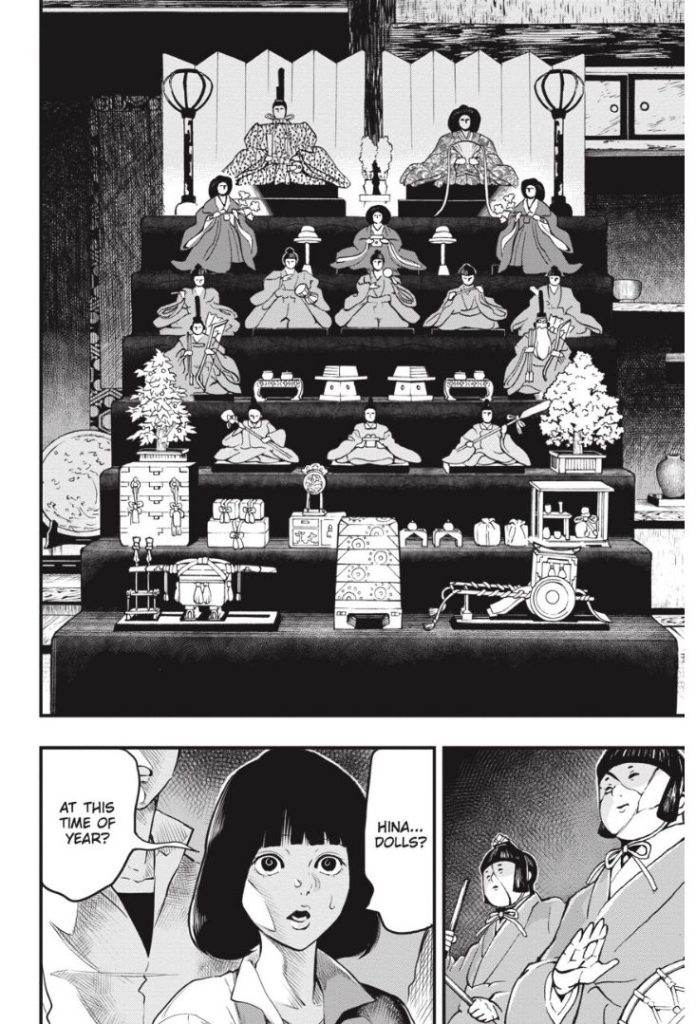
The manga starts off with one-shot stories of people attempting to climb the mountain and vanishing: a group of college students, a reporter for a supernatural magazine, a woman researching local folktales, etc. The series is strongest in the early stages when the danger is at its most mysterious: the people who stumble into the the village just have little glimpses into the monstrosities going on before either being killed or going mad from the experience. The students are introduced via the ‘maid’ to a mansion run by an eerie woman named Touko Kamiya, and it’s mere minutes later that the members of their group are killed one by one. Another chapter has a girl who stumbles into the village by accident and gets to see more of the mansion but ends up meeting one of the more gruesome fates in the manga.
But the second half of the story becomes more of a typical horror-adventure tale. One of the students from the opening chapter is (somehow) still alive and becomes the protagonist and eventually solves the mystery. This is disappointing for several reasons. Whilst having a POV character being the one to drive the conclusion of the horror tale is fine, and solving the mystery of why the demon woman kidnaps people is expected, it’s how they go about it that matters. It was hinted very clearly in the first chapter that the student was dead. It was also suggested that his ‘eyes’ were taken out and used for the demon lady in question, as not only do we see a blind woman in the opening chapter, but several of the villagers comment on this man’s eyes being particularly pretty. So to have the man in question still alive and also still with his eyes, and the demon lady also having eyes, is a bit of a weird twist. If someone else had been the lead role in the second half of the story, it probably wouldn’t have been as bad.
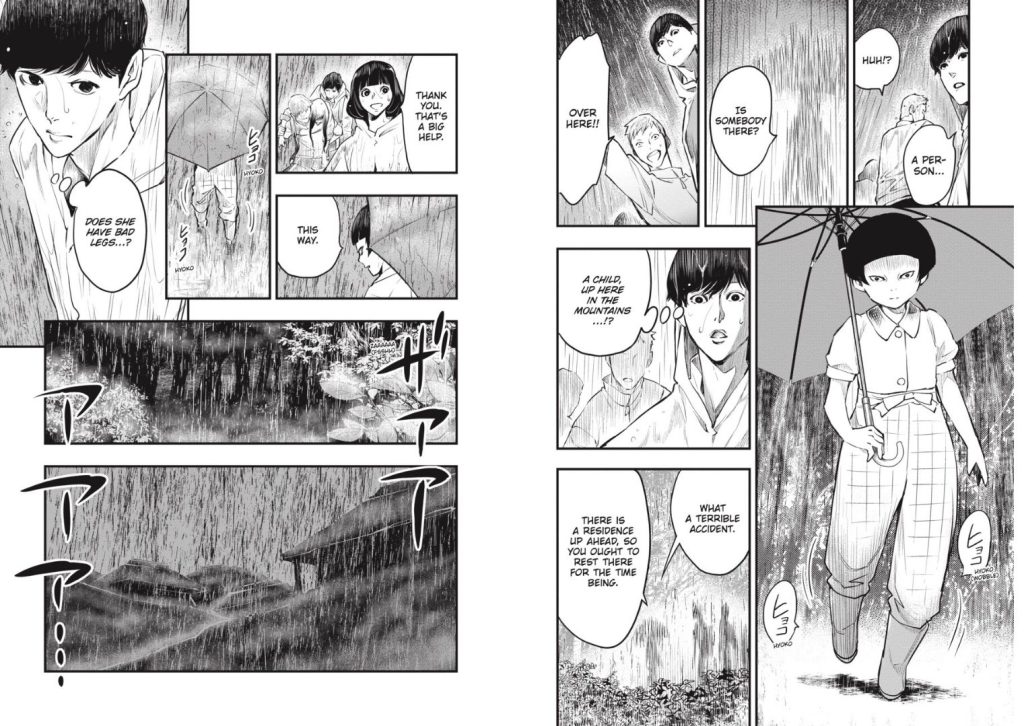
However, the other problem in the second half is that the mystery in question is a bit contradictory. In the opening chapters, it’s shown explicitly that the reason people go missing is for their body parts; the villagers are ‘stitched’ together as it were, with even animals not being safe from the process. Then, a new element is introduced to this horror tale, that contradicts information that’s come before. In the opening it’s hinted that they’re stitching body parts together via sorcery, but then we get a separate… ‘entity’ that seems to immediately heal others’ body parts (so why the body-part harvesting of others?). It also takes a life of its own that leads to a big monster in the last chapters, quite different from the Frankenstein vibes of the earlier chapters. To me, it reads like two different ideas in Aki Shimizu’s brain have been stitched together, and the mangaka attempted to make them work, but didn’t smooth out the details to make it make sense.
It’s a shame as this story has potential, and gorgeous art to boot; it’s clear that Abi Shimizu is an experienced mangaka because not only do we have some gruesome body art in this story, but the woman on the cover, Kiriko, who’s meant to be constantly ‘remade’ to be the most beautiful woman, really looks ethereal and inhumane in every panel she’s in. This is despite some flow issues with the panels, where sometimes a gruesome moment lacks the right number of panels building up to it to make it work.
The translation by Eleanor Summers is an easy read, with some early character designs on the back pages, and the book is printed as a hardback with a lovely dust jacket – it certainly makes a good first impression!
This Frankenstein-meets-Japanese folklore tale could have been interesting, but re-writes and story directions in the second half end up making the manga lack impact. If you’ve already devoured all other the horror manga out there, maybe give this a go and see if it tides you over until the next release. I hope we get more of Aki Shimizu’s work in the future and see if her other horror tales have more to offer.
Our review copy was supplied by Yen Press.